
What this covers
- Why Oyster Mushroom Growing Kits Dominate the Beginner Market
- 1. Hodgins Harvest Organic Pink Oyster Mushroom Grow Kit
- 2. North Spore Blue Oyster Mushroom Spray & Grow Kit
- 3. Root Mushroom Farm Golden Oyster Mushroom Growing Kit
- 4. Forest Origins Pink Oyster Mushroom Grow Kit
- 5. Back to the Roots Organic Mushroom Grow Kit
- 6. Shiitake Mushroom Growing Kits
- 7. Lion's Mane Mushroom Growing Kits
- What Actually Kills Mushroom Growing Kits
- Instructions That Contradict Each Other
- How Long Mushroom Growing Kits Actually Last
- Are Mushroom Growing Kits Worth the Price?
The promise sounds simple: open a box, mist the block of substrate with water, and in a week’s time you can be picking your own fresh mushrooms from the kitchen counter. The reality? Mushroom growing kits have very different yields, often confusing instructions, and sometimes the substrate starts to crumble before any mushrooms appear at all.
Consumer Reports and other testers have put popular kits through detailed trials, measuring yields, timing, and ease of use. This guide draws on that testing data alongside grower reports and research to explain which kits work for complete beginners and which ones demand more experience.
The best options share three traits: they fruit fast, they tolerate beginner mistakes, and they produce enough mushrooms to justify the price. A kit that asks you to spray four times a day is not beginner-friendly, no matter how high the yield. A kit that fruits once and dies is a science experiment, not a food source.
Why Oyster Mushroom Growing Kits Dominate the Beginner Market
Oyster mushrooms grow fast, tolerate a wide humidity range, and fruit reliably even when conditions aren’t perfect. That’s why nearly every beginner-focused kit uses them. According to a 2025 guide on mushroom growing kits, oyster and shiitake varieties are the most common in beginner kits, and oyster mushrooms typically produce their first harvest within seven to ten days after setup.
Shiitake takes longer and demands more precise humidity, which is why oyster kits are the better starting point. Pink oyster mushrooms fruit even faster than blue or golden varieties, but they also dry out faster and need more frequent misting. One Consumer Reports test found that a Forest Origins Pink Oyster kit showed baby mushrooms four days after setup, with the first harvest ready between days seven and ten. The mushrooms were slightly drier than other varieties, which matches what growers report about pink oysters in general.
1. Hodgins Harvest Organic Pink Oyster Mushroom Grow Kit
In the Consumer Reports test, this kit outproduced every other option by a wide margin. The first harvest yielded 302 grams at day twelve—double the next highest kit. The second round yielded over half the weight of the first, which is typical for most mushroom growing kits. The kit measured 9.17 by 8.27 by 6.77 inches, weighed 6.8 pounds, and was priced at thirty dollars in the test.
The trade-off is maintenance. Hodgins Harvest requires spraying two to four times per day. Miss a spray session and the substrate dries out, which stalls fruiting. For someone home most of the day, that’s manageable. For someone who travels or works long shifts, it’s a problem.
If you’re chasing the highest yield and you can commit to frequent misting, this kit delivers.
2. North Spore Blue Oyster Mushroom Spray & Grow Kit
Blue oyster mushrooms are meatier than pink varieties and hold up better to sautéing or roasting.
In the same Consumer Reports test, North Spore produced 147 grams on the first harvest and 90.7 grams on the second. The mushrooms took around eight days to start growing, then two days from baby mushrooms to harvest. The kit measured ten by five by five inches, weighed four pounds, and was priced at twenty-eight dollars. It requires spraying twice daily and doesn’t need presoaking, which makes setup faster than kits that ask you to soak the substrate overnight.
The twice-daily misting is more forgiving than the Hodgins schedule, and the blue oyster flavor is superior to pink for most cooking uses. That balance between yield and effort makes this a solid choice for beginners.
3. Root Mushroom Farm Golden Oyster Mushroom Growing Kit
Golden oysters are milder than blue or pink varieties, with hints of a fruit flavor. Some growers prefer this over the more earthy alternatives.
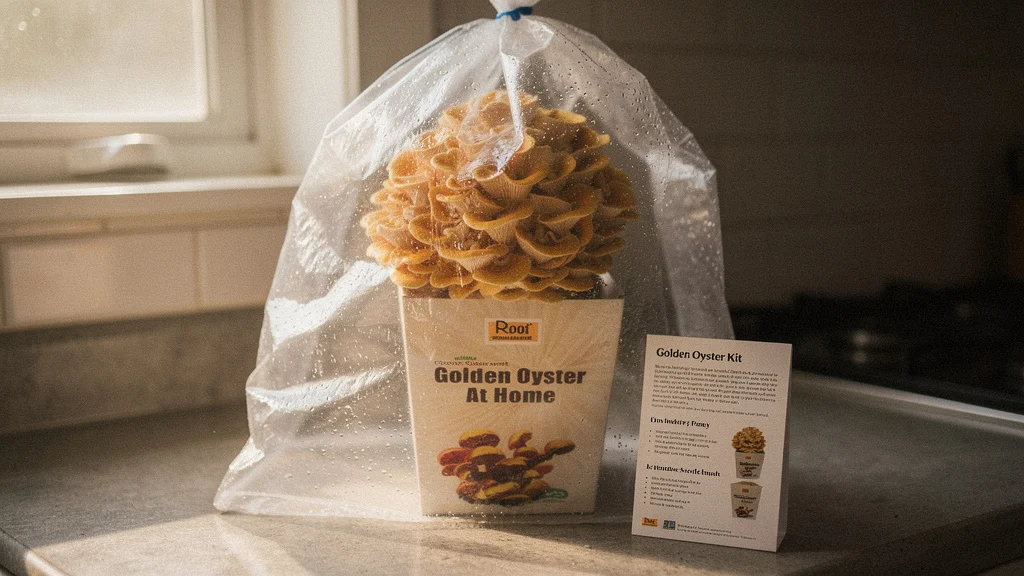
This kit yielded 72 grams on the first harvest and around 60 grams on the second in the Consumer Reports test. It was the only kit to reach a third yield faster than all other options. The kit measured eight by five by five inches, weighed three pounds, and was priced at $27.99.
It includes a humidity tent—a plastic bag that traps moisture around the substrate. The bag works, but it makes the kit less visually appealing if you were hoping to display it on a counter. The multiple harvests make up for the lower individual yields, and this kit can be harvested several times before you need to purchase another one.
4. Forest Origins Pink Oyster Mushroom Grow Kit
Forest Origins fruited faster than any other option in the Consumer Reports test, showing baby mushrooms four days after setup. The first harvest yielded 34 grams, which is low compared to the top producers but still enough for a meal.
The kit measured 7.44 by 5.43 by 4.8 inches, weighed 2.31 pounds, and was priced at $27.99. Research from Cambridge (2023) found Pleurotus mushrooms (oyster genus) contained approximately five times more β-glucan than button mushrooms when comparing freeze-dried samples, though beta-glucan content varies by species and growing conditions.
This is a small, fast, and easy kit to use. If you want quick results and don’t need a massive harvest, this is a solid choice.
5. Back to the Roots Organic Mushroom Grow Kit
Want to try growing mushrooms for less than thirty dollars? This is where to start.
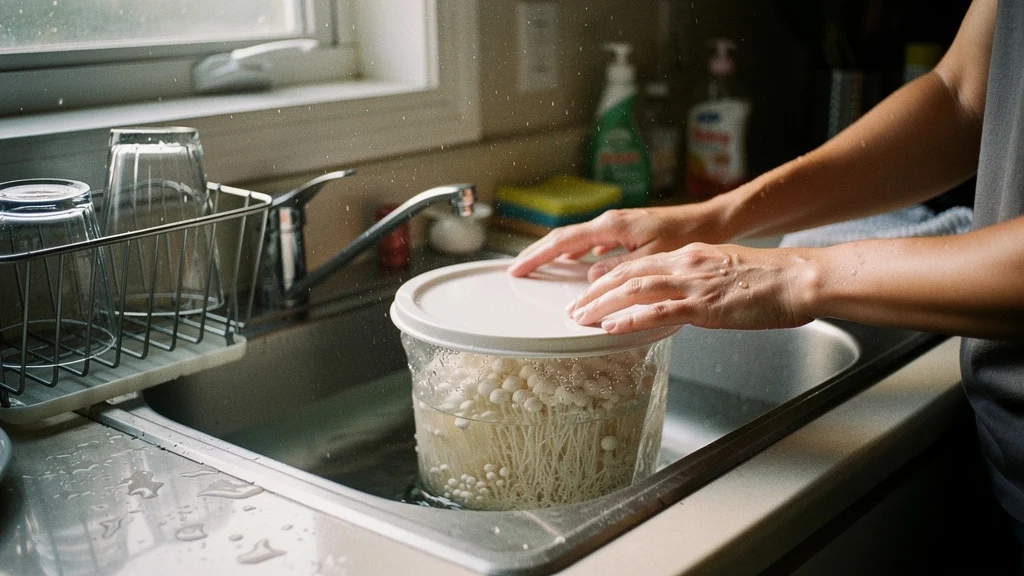
The kit was priced at $18.44 in the Consumer Reports test, measured four by three by five inches, weighed 1.61 pounds, and yielded 35 grams on the first harvest. It requires presoaking overnight in the sink, which adds a step but also ensures the substrate is fully hydrated before fruiting begins.
According to a community discussion, Back to the Roots kits come as vacuum-sealed bags containing mycelium and are designed to fruit following the included instructions. Low yield, low price. It’s a reasonable experiment if you’re not sure whether mushroom growing is for you.
6. Shiitake Mushroom Growing Kits
Shiitake mushrooms have a richer, more complex flavor than oyster mushrooms, and they’re worth the extra effort if you cook with them regularly. But they’re harder for beginners.
Shiitake kits take longer to fruit than oyster kits—typically two to three weeks instead of one. They also demand more consistent humidity and cooler temperatures. One reviewer testing a Dobies shiitake kit encountered confusing instructions that appeared to be translated from Dutch, and the substrate broke apart easily during handling. Despite those issues, the kit produced a large harvest two weeks after starting, with expectations of five to eight harvests over six months.
A USPTO patent document on shiitake cultivation describes second flush appearing after 7-10 days, with second harvest on days 13-14 yielding 40-80g fresh fruit bodies, showing the typical decline in successive flushes.
Beginners should start with oyster mushroom growing kits and move to shiitake once they understand how humidity and air exchange affect fruiting.
7. Lion’s Mane Mushroom Growing Kits
Lion’s mane grows as a single mass rather than in clusters of individual caps. It prefers high humidity with indirect light. Mild in flavor and slightly seafood-like in taste, it’s often eaten as a meat substitute.
Kits for growing lion’s mane are less common than kits for oyster or shiitake. Lion’s mane is better as a second or third species to grow after oyster, but not as a first attempt.
What Actually Kills Mushroom Growing Kits
Insufficient moisture is the most common reason kits fail. According to a guide on mushroom growing problems, mycelium needs a moist environment to thrive, and mushrooms themselves are mainly water. If the mycelium dries out or humidity levels get too low, mushrooms won’t develop.
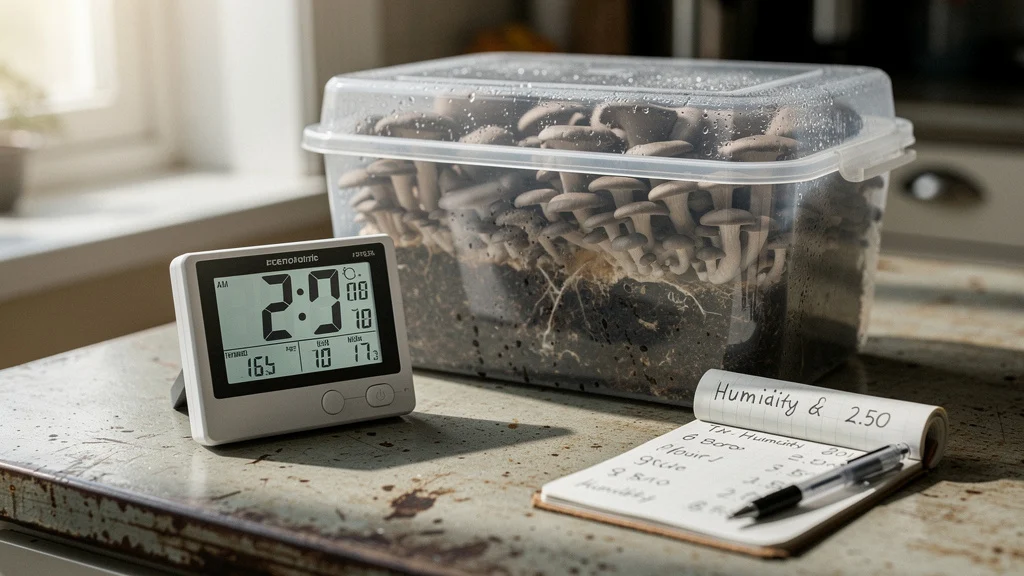
The same guide recommends using a cheap hygrometer to monitor moisture and humidity levels, and misting or watering the kit when you see and feel things drying out. The key is drainage: don’t let the kit sit in standing water after misting, as this encourages bacterial growth and mold.
Contamination: What It Looks Like and Why It Matters
Contamination appears as discoloration on the grain, substrate, or mycelium. North Spore (2024) describes various mold contaminants including orange Neurospora appearing as orange-white wisps developing into bright orange powdery patches. Research (2021) identifies multiple fungal contaminants including Trichoderma, Mycogone, and others that infect mushroom crops at different stages.
Once contamination takes hold, the kit is usually finished. The competing mold or bacteria will outpace the mushroom mycelium, and you’ll end up with a block of green or orange fuzz instead of edible mushrooms. That means your thirty-dollar investment produces nothing—no harvest, no learning experience beyond “this block turned orange.”
Prevention is straightforward but easy to forget. A guide on common mushroom growing problems notes that maintaining cleanliness by washing hands and keeping the growing area away from sources of contamination like litter boxes helps prevent this. One community report described contamination problems with Mushroom Supplies all-in-one grow bags, specifically noting that Bacillus bacteria frequently overtook the substrate, while Midwest Grow Kits bags reportedly avoided those issues. Not all kits are created equal when it comes to sterile production.
Recognizing contamination early matters because you can sometimes salvage a kit if you catch it before the mold spreads. Orange Neurospora is easy to spot—it looks exactly like it sounds. Green Trichoderma starts as white fuzz that turns green as it matures. If you see either, the kit is done.
Air Exchange and Spindly Mushrooms
Mushrooms need adequate air exchange. They can grow stunted—long and thin with small caps—if there’s too much carbon dioxide in the air. But introducing fresh air also introduces the risk of contamination and lowers humidity.
In most kits, the mycelium is contained in a tent or bag which allows for some air exchange while retaining moisture. If your mushrooms are growing tall and thin with small caps, they need more fresh air. It’s a balancing act, and it takes a harvest or two to get a feel for it.
Instructions That Contradict Each Other
One reviewer testing a Dobies kit received conflicting instructions from the package, the company’s PR department, and an online video, particularly regarding whether to keep the substrate dark for a week or covered with a transparent lid during the initial growth phase. The same reviewer noted a helpful tip: when soaking substrate for 24 hours, put holes in the bottom of the plastic bag and soak it while still in the bag rather than removing the substrate first. This prevents the substrate from breaking apart and becoming difficult to handle when transferring it back to the growing container.
When instructions disagree, follow the most recent version from the manufacturer’s website rather than the printed insert, which may be outdated. If the website doesn’t clarify, start with the most conservative approach: keep the substrate moist, provide indirect light, and avoid temperature extremes.
How Long Mushroom Growing Kits Actually Last
Most kits produce two to three harvests before the substrate is exhausted. A few, like the Root Mushroom Farm kit, can reach a fourth harvest if you keep the substrate moist and give it time to recover between flushes.
According to a guide on spawn viability, mushroom spawn loses viability over time and should be used promptly after purchase. Old spawn or spawn that has traveled long distances may not be vigorous and can fail to thrive. Keeping spawn in the refrigerator extends its life, but it becomes less viable with every passing week.
When buying a mushroom growing kit, the date of production matters. Kits that have been sitting in a warehouse for months are best avoided. Fresh spawn produces fruit quicker and yields more mushrooms.
Are Mushroom Growing Kits Worth the Price?
A thirty-dollar kit that yields 300 grams of fresh oyster mushrooms across two harvests costs about ten dollars per hundred grams. A 2026 commercial guide states farmers’ market and grocery prices for oyster mushrooms are generally $10-$16 per pound, or roughly $22-$35 per hundred grams, though wholesale prices over the past four weeks in 2026 were $4.95-$8.33 per pound.
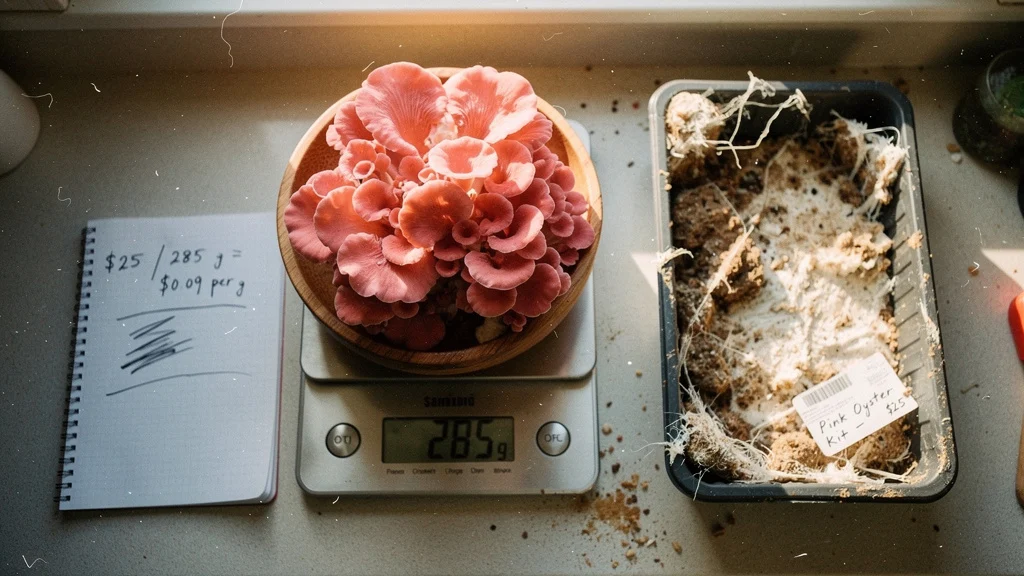
The kit may be cheaper than retail, but only if you count your time at zero and only if the kit actually produces the advertised yield.
These kits are worth your time and money if you’re interested in growing your own mushrooms, enjoy the care and attention that a living species gets on your counter, and can’t find fresh oyster or shiitake mushrooms at your local produce market. Growing your own mushrooms isn’t cost effective if you only calculate the cost per gram and you have access to a good produce market.
For beginners, start with an oyster kit that doesn’t require presoaking. The Hodgins Harvest kit produces the most mushrooms, but the North Spore kit is easier to maintain and still delivers a solid harvest. If you want to spend less than twenty dollars and you’re willing to accept a smaller yield, the Back to the Roots kit is a reasonable experiment. Shiitake and lion’s mane kits are better as a second attempt, after you’ve learned how humidity and air exchange work with a more forgiving variety.
