
What this covers
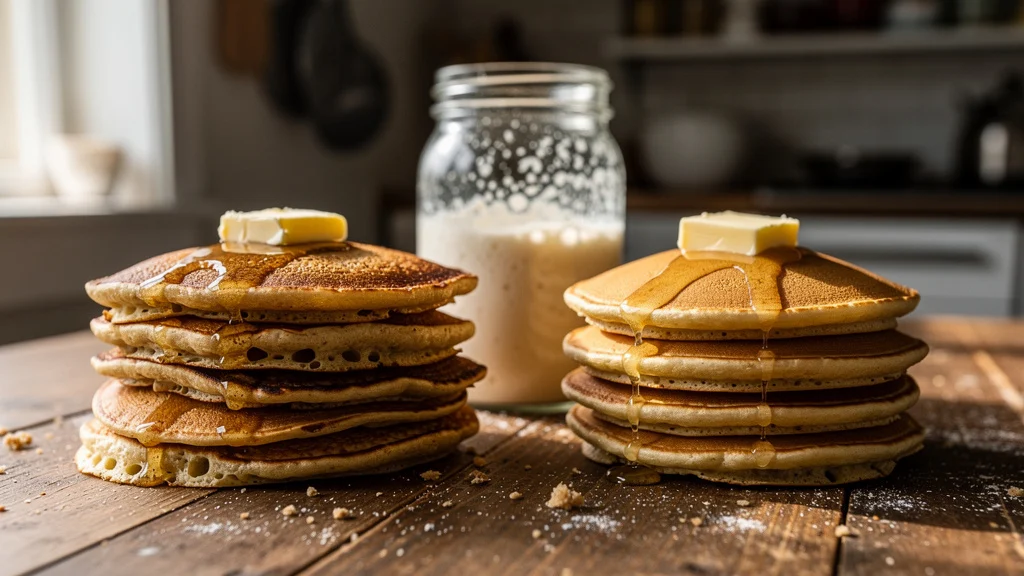
- Result One: The Tang Is Real, But Not Always Welcome
- Result Two: Texture Changes in Ways You Can Feel
- Result Three: Fermentation May Improve Digestibility
- Result Four: Sourdough Discard Pancakes Freeze Better and Reheat Cleaner
- Result Five: The Recipe Demands More Attention to Timing and Temperature
- A Working Recipe That Delivers on All Five Results
- When Regular Pancakes Are Actually the Better Choice
Sourdough discard pancakes promise to turn leftover starter into better breakfast while reducing waste. The appeal is straightforward: use what you would otherwise toss, skip the boxed mix, and potentially improve texture and flavor. The reality involves trade-offs that matter depending on your schedule, audience, and tolerance for precision.
Five differences emerged clearly enough to guide a decision about whether sourdough discard pancakes are worth the extra steps compared to a standard recipe.
Result One: The Tang Is Real, But Not Always Welcome
Sourdough discard pancakes will have a sour note that regular pancakes do not. Some people enjoy the sour taste while others do not.
According to one community report, kids did not care for the sourdough “twang,” though vanilla and maple syrup helped mask the flavor. Another home baker noted that when using 90 grams of starter, “none of us noticed the difference” in taste between regular and sourdough pancakes. The intensity depends on how sour the discard is before it goes into the batter.
One recipe guide explains that lactic acid develops in cooler temperatures when discard sits in the fridge, creating a mild, yogurt-like tang, while acetic acid develops in warmer temperatures around 75°F, producing a sharper, vinegar-like flavor. Fresh fridge discard keeps the sourness subtle. Older counter discard makes it pronounced.
The same discarded mixture can develop quite different levels of acidity and corresponding flavors. The length of time that the discard ferments before use, as well as the storage temperature, play as great a role as the age of the discard itself. So while old discard may be very sour, equally sour flavor can be developed in relatively young discard, if allowed to ferment for some time. By discarding on a regular basis rather than allowing it to accumulate, you can control the degree of sour flavor that the mixture develops.
The tang of the discard is okay when it is in the background and is adding complexity to the other flavors on the plate and not overpowering them. Once the discard starts to taste like vinegar, it overpowers the flavors of the syrup and the butter. Using cold discard straight from the fridge and not letting it sit around for days before using it in baking helps to prevent this.
Flour in your starter can also affect the finished flavor of your pancakes. Starters made with whole wheat or rye tend to have more pronounced earthy flavors than those made with all-purpose flour, and so more sour. If you have multiple starters of different flours, then discard from your all-purpose flour starter will provide the most neutral-tasting pancakes.
Result Two: Texture Changes in Ways You Can Feel
The texture difference is immediate. Sourdough discard pancakes develop a crispy exterior when fried, according to users who tested them, and the inside stays tender. Regular pancakes made with the same technique come out softer all the way through, with less contrast between the crust and the center.
Multiple bakers report that pancakes with sourdough discard are fluffy and tender with the right amount of tang, and some say they cannot return to conventional recipes after switching. One reader named Zackary reported that anti-pancake teenagers became fans after trying a sourdough version, requesting them again within the same week.
The crispy edge comes from the acids in the discard reacting with butter in the pan. Regular pancakes brown, but they do not develop the same crunchy rim. That contrast makes sourdough discard pancakes feel more substantial, even when the recipe uses the same amount of flour.
Additionally, the interior of the pancakes is different. The sourdough discard pancakes have an open crumb with irregular air pockets. This is similar to how sourdough bread looks on the inside. Regular pancakes have a more uniform, cake-like crumb. When you tear these apart instead of cutting them with a fork, you can really see the difference. The more irregular interior of the sourdough discard pancakes creates more surface area for butter and syrup to get into, affecting how the toppings of the pancakes will distribute when you eat them.
Result Three: Fermentation May Improve Digestibility
Sourdough fermentation alters protein structure and digestibility, according to one case study. Research shows that sourdough processing contributes to better digestible wheat-based bakery products due to proteolytic activity of lactic acid bacteria. But, the process does not make products gluten-free or safe for individuals with celiac disease.
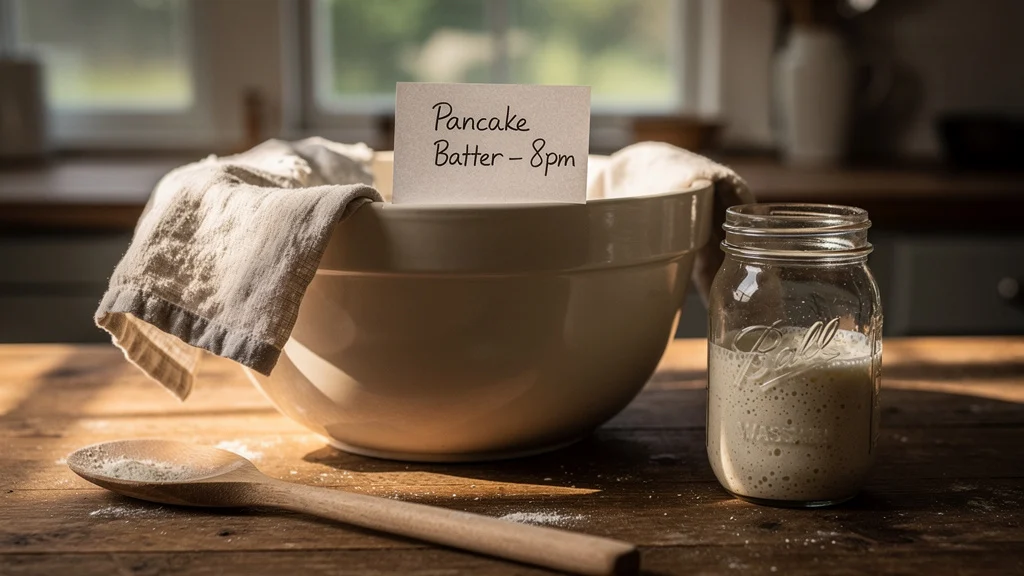
The fermentation happens in two stages. The discard itself has already been fermenting in the jar, so it arrives in the batter with active cultures. Then, many recipes call for an overnight rest at room temperature, where the batter sits for about 12 hours before cooking. One common method mixes sourdough discard, flour, buttermilk, and sugar the night before, then adds baking soda and baking powder the next morning right before cooking to maintain maximum lift.
Most pancake recipes are simply mixed up and cooked immediately, before the flour can even start to break down. The batter is cooked up in minutes, a far cry from the slow-cooked flour used in the examples above.
The fermentation process also reduces phytic acid, a compound found in grains that can interfere with mineral absorption. Research on rye fermentation found an approximately 30% increase in the bioaccessibility of magnesium, calcium, and zinc after 24 hours. Another study showed that sourdough or lactic acid addition allowed significant phytate breakdown (70% of initial flour content compared to 40% without leavening), and phytate contents in yeast and sourdough bread were lower than in reconstituted whole wheat flour (-52% and -71%, respectively). The wild yeast and bacteria in sourdough discard produce enzymes that break down phytic acid during the overnight rest, making minerals like iron, zinc, and magnesium more available for absorption.
Result Four: Sourdough Discard Pancakes Freeze Better and Reheat Cleaner
Cooked sourdough discard pancakes can be frozen for 3-4 months in an airtight container or ziplock bag, according to multiple sources. The preferred reheating method is a toaster, which makes the outside crispy while keeping the inside soft. Pancakes can be reheated directly from frozen.
As for frozen and then reheated regular pancakes, they don’t hold up too well, getting considerably flatter and then much softer than when they were first made. The acids in the sourdough discard seem to preserve the structure of the pancakes over time, making them a good option for big batches of pancakes that can be served as quick breakfasts on subsequent days of the week after they’ve been made on the weekend.
One recipe guide recommends placing parchment between each pancake to prevent sticking when frozen. Leftover pancakes also hold up in the fridge for up to 24 hours in an airtight container, and they reheat in a toaster, toaster oven, or microwave without turning rubbery.
Freezer storage of sourdough discard pancakes also provides another benefit beyond simple storage. Unlike regular pancakes that become soft and uniformly so upon freezing, these keep their crispy edges even after thawing. They even retain most of their flavor and so make a great breakfast that can be reheated as well as eaten straight from the freezer. They also hold up very well to being packed for transport in a lunch and to being eaten on the go as a breakfast item, whereas regular pancakes often become soggy.
Result Five: The Recipe Demands More Attention to Timing and Temperature
Sourdough discard pancakes require more precision than regular pancakes, and the margin for error is smaller.
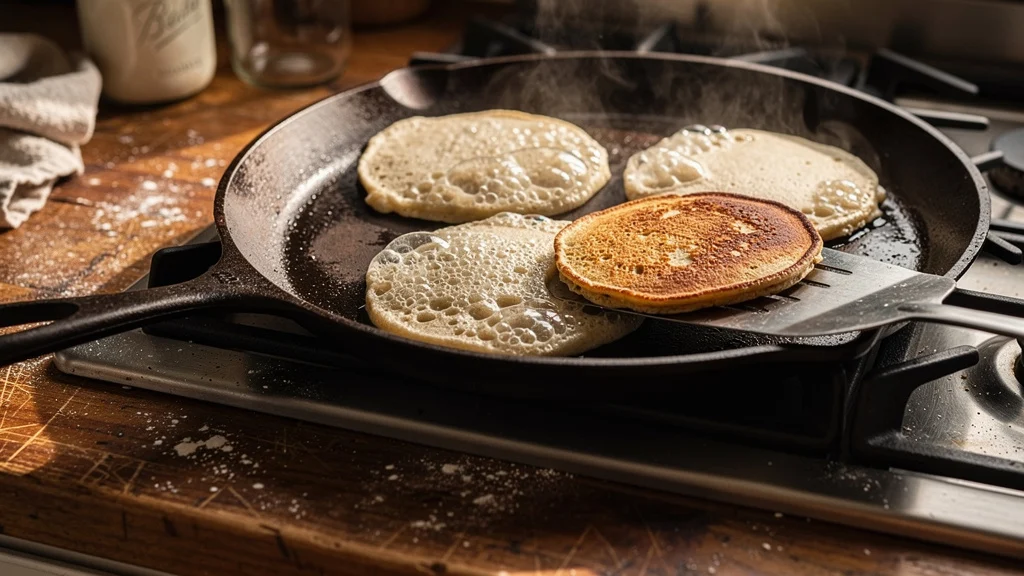
When baking soda comes into contact with an acid, it reacts immediately. Most pancake batters use double-acting baking powder, which releases ~20% of its gas at room temperature when hydrated and ~80% only when heated above 140°F. But, baking soda acts quickly, so batters must be baked immediately. One recipe source explains that the reaction starts to die after 5 minutes, becoming mostly dead within 30 minutes of mixing. For best results, cook the batter within 5 minutes of adding leaveners. Regular pancakes tolerate a longer wait between mixing and cooking without losing as much lift.
Heat control matters more, too. One guide recommends cooking on medium to medium-low heat, around 300°F surface temperature, for 5 minutes on the first side until bubbles appear and edges look dry, then flipping once and cooking 3 minutes on the second side. Cooking low and slow prevents burning the outside while leaving the middle gummy or raw. Another source suggests medium-low heat for about 2 minutes per side, waiting for bubbles to form on top before flipping, and using butter in the pan to create golden, crispy edges without burning.
Pancakes are ready to flip when three things happen simultaneously, according to one technique guide: edges look dry and matte instead of wet and shiny, holes have formed and stayed open on top, and the bottom has a clean release when sliding a spatula under. Relying only on bubbles can lead to premature flipping.
To avoid tough, rubbery pancakes, multiple sources recommend mixing the batter only until combined with small lumps remaining. Over-mixing develops gluten and creates dense, tough pancakes. The batter should have small lumps of flour and bits of butter, which is preferred for fluffy results.
One recipe guide notes that sourdough pancake batter often thickens as it sits because the flour absorbs moisture. Bakers should be prepared to add a splash or two of buttermilk or milk to thin the batter to desired consistency before cooking.
The thickening issue becomes more pronounced with whole grain flours, which absorb liquid more aggressively than all-purpose flour. If you walk away from the batter for even ten minutes, you may return to find it has transformed from pourable to spoonable. This means you need to stay present during the cooking process, adjusting consistency between batches rather than mixing once and walking away. Regular pancake batter remains more stable and forgiving throughout the cooking session.
A Working Recipe That Delivers on All Five Results
A popular recipe uses 150 grams sourdough discard at 100% hydration, 420 grams buttermilk, 2 large eggs, 45 grams sugar, 60 grams melted butter, and 275 grams all-purpose flour, according to one source. The recipe yields approximately 12 large pancakes and takes 30 minutes total time.
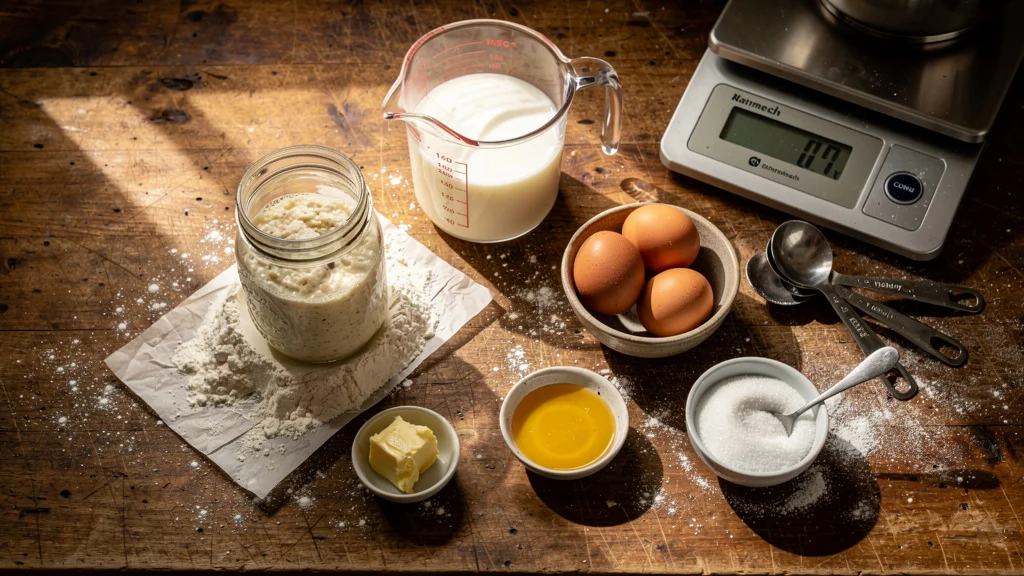
Most recipes call for ½ to 1 cup of sourdough starter discard per batch, which is the portion removed when feeding a sourdough starter, according to multiple guides. The discard is typically used cold straight from the fridge and is made from 100% hydration starter, meaning equal parts flour and water.
For those without buttermilk, one common substitute measures ¾ cup milk and replaces 1 tablespoon with 1 tablespoon lemon juice or white vinegar. Let the mixture sit for 5-10 minutes before using in the recipe.
When using whole grain flour in sourdough discard pancakes, one guide recommends letting the batter rest for 5-10 minutes after mixing to produce softer and fluffier pancakes. The recipe works well with freshly milled einkorn, soft red wheat, soft white wheat, and spelt flour as substitutes for all-purpose flour.
For more tangy flavor, one method suggests mixing all ingredients except baking powder, baking soda, and salt, then refrigerating for 24-48 hours. These leavening agents are added before cooking, though adding them before fermentation is possible with slightly reduced fluffiness.
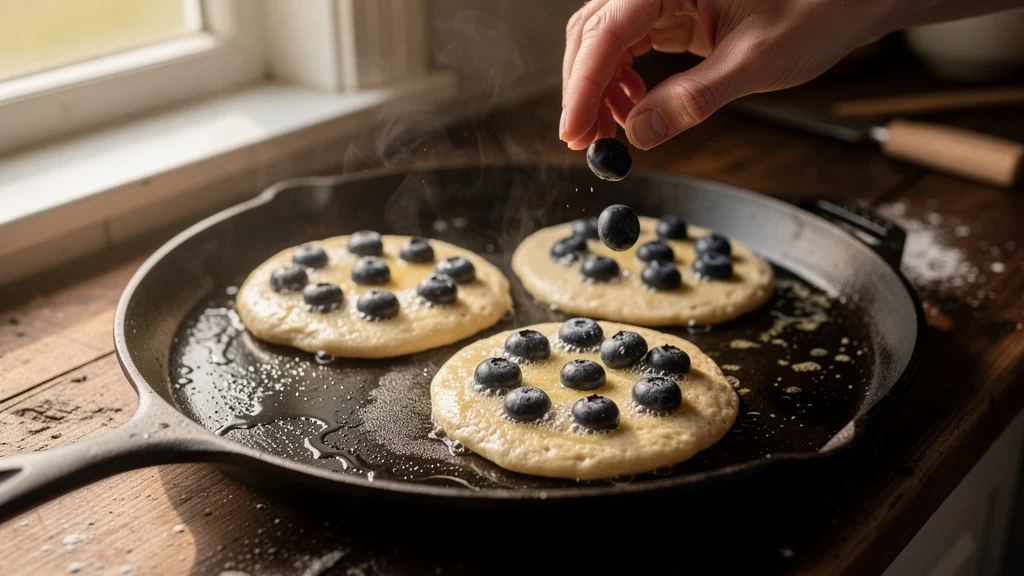
When adding blueberries, one technique pours batter onto the skillet and waits about 30 seconds before dropping 4-5 blueberries on top of each pancake. This helps keep berries evenly spaced and prevents sticking.
When Regular Pancakes Are Actually the Better Choice
Sourdough discard pancakes are not always the right answer.
Regular pancakes are faster. They do not require planning the night before, and they tolerate mistakes better. The batter does not thicken as it sits, the leavening stays active longer, and the flavor is predictable. For a weekday breakfast when you need food on the table in fifteen minutes, a standard recipe wins.
Regular pancakes also work better when feeding a crowd that includes picky eaters. The tang in sourdough discard pancakes divides people, and some kids reject it outright. A neutral base that pairs with any topping is safer when you do not know the audience.
As for equipment, sourdough discard pancakes are best made with consistent, controlled heat. This is easily achieved with an electric griddle that has a temperature control. On the other hand, regular pancakes are quite flexible and can be cooked on any surface with any heat source. If you are planning to make these on a camping stove or in an unknown kitchen, then regular pancakes are best as they require the fewest variables to be controlled.
These pancakes are worth your time to mix up a special batter using the cold discard you have hanging out in the fridge. The edges get all crispy, there may be some improved digestibility, and they freeze really well. But sourdough discard pancakes are not a pancake you can make up and expect to be as good as your regular pancakes. They need to be approached with a little respect. Make sure you are using cold discard, don’t cook them too high, and add your leaveners and mix until combined. If mixing up a special batter for these sounds like too much work, make regular pancakes and save the discard for another time.
Related reading: Backyard Chickens: 7 Surprising Costs, an Honest Coop-to-Egg Guide | What is Tepache?


