What this covers
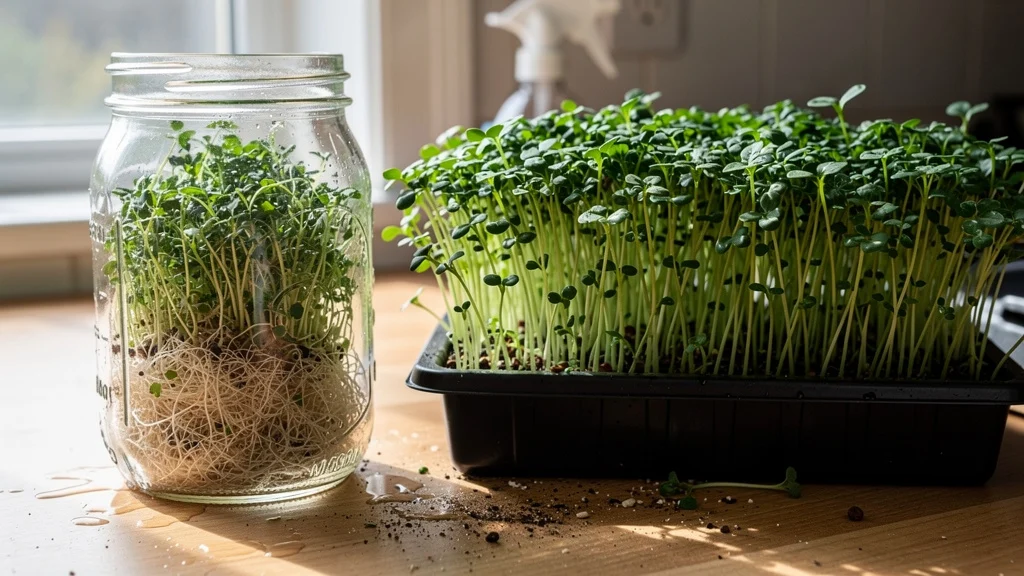
The two look similar in the grocery store, and both show up in the same health-food conversations, but microgreens and sprouts are not interchangeable. We grow both, and the differences matter more than most people realize. One takes three days in a jar with no soil. The other takes two weeks in a tray under light. One has a documented food safety problem. The other does not. One lasts four days in the fridge. The other lasts two weeks. Understanding microgreens vs sprouts helps you choose which one fits your kitchen, your timeline, and your food safety priorities.
The question of microgreens vs sprouts comes up in every conversation we have about growing food at home, and the answer is never simple. Both are nutrient-dense. Both are cheap to grow. But the method, the timeline, the safety profile, and the nutrition are different enough that choosing one over the other changes what you eat and how you plan your kitchen. The microgreens vs sprouts debate is not about which one is superior—it is about which trade-offs match your needs.
Microgreens vs Sprouts: Growing Method and Timeline
Sprouts need water, a jar, and patience measured in days.
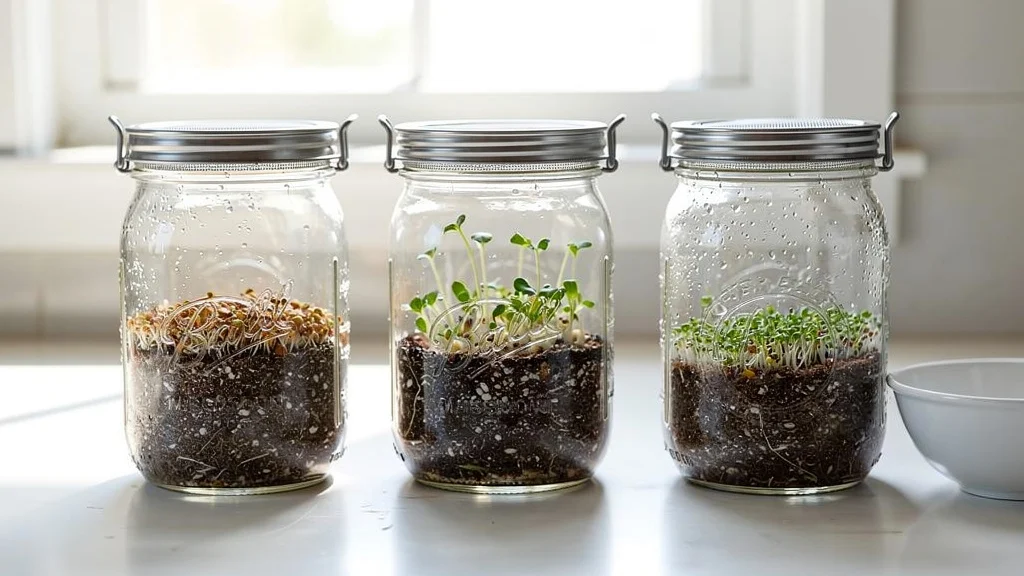
According to multiple growing guides, sprouts germinate in water without soil or light, typically ready in three to seven days. The seeds soak, then drain and rinse two or three times daily until the sprout is ready to eat. The entire plant—seed, root, stem—goes straight from jar to plate. No cutting, no medium, no light cycle. water and time.
The initial soak matters more than most people realize. That first soak activates enzymes inside the seed that break down starches and proteins, making them more digestible. It also softens the seed coat, which speeds up the sprouting process and reduces the chance of seeds that never germinate sitting in your jar and rotting.
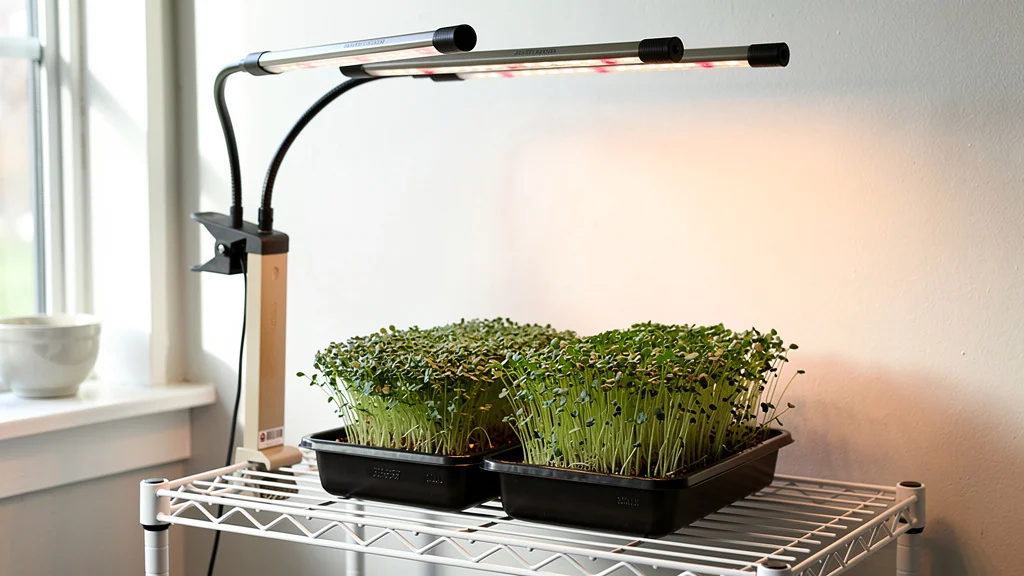
Microgreens are a different project. They require a growing medium—soil, coco coir, or a mat—and light for 16 to 17 hours per day. The timeline stretches to 8 to 14 days for most varieties, with some herbs pushing three weeks. At harvest, the stem and leaves are cut above the soil line. The roots stay in the tray. If you are already growing mushrooms at home, microgreens fit a similar rhythm of tray-based cultivation.
The light requirement is not optional. Without adequate light, microgreens become leggy, pale, and weak-stemmed. They will still grow, but they will fall over under their own weight and lack the chlorophyll and nutrient density that makes microgreens worth growing in the first place.
The difference is not aesthetic. Sprouts grow in the dark, in constant moisture, in conditions that favor speed. Microgreens grow in light, with airflow, in conditions that favor photosynthesis. That split determines everything else in the microgreens vs sprouts comparison.
What You Eat and How Long It Lasts
With sprouts, you eat the whole thing. Seed coat, root, stem, cotyledon. Nothing is trimmed. That means more fiber, more digestive enzymes, and more of the compounds locked inside the seed itself.
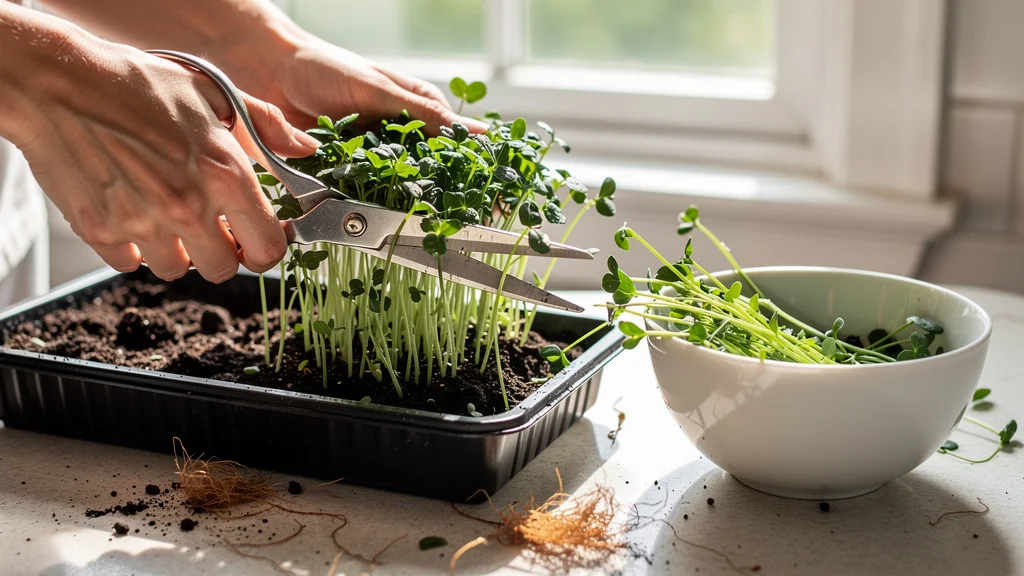
Microgreens are harvested above the medium, so the root and seed are left behind. What you eat is the stem and the first set of true leaves, which have spent days photosynthesizing under light. That process produces chlorophyll, carotenoids, and higher concentrations of vitamins C, E, and K. A University of Maryland and USDA study found that red cabbage microgreens contained 40 times more vitamin E and six times more vitamin C than mature red cabbage, with microgreens being four- to 40-fold more concentrated with nutrients than their mature counterparts.
The harvest window for microgreens is wider than most people expect. That flexibility means you can harvest what you need and leave the rest growing, which extends the practical shelf life beyond what the numbers suggest.
Shelf life is where sprouts lose. They last a few days to a week in the fridge, with some varieties like sunflower and bean sprouts spoiling in four to six days. Microgreens, when stored properly, last 7 to 14 days. One secondary research lead noted that drying sprouts thoroughly in a salad spinner before refrigeration is the single biggest factor in whether a batch lasts a week or spoils in three days. We have seen that play out in our own fridge more times than we care to admit.
Storage method matters for both. Microgreens do better in a sealed container with a paper towel at the bottom to absorb excess moisture. The paper towel trick can add three or four days to the shelf life, especially with varieties like basil or cilantro that tend to wilt faster than brassicas. When you are thinking about microgreens vs sprouts, shelf life often tips the scale toward microgreens for households that do not eat a full batch in one sitting.
The Food Safety Gap
This is the part that matters most if you are feeding children, elderly family members, or anyone with a compromised immune system. According to the FDA, there have been multiple outbreaks of Salmonella and E. coli linked to commercially grown sprouts, with 55 people infected across 15 states from alfalfa sprouts, and a separate outbreak linked to broccoli sprouts. Young children, the elderly and people with weak immune systems (including pregnant women, people undergoing chemotherapy, and AIDS patients) are most susceptible to complications from illness caused by Salmonella and E. coli. The problem is the growing environment: warm, dark, and humid, exactly the conditions that favor rapid bacterial multiplication. Even with seed disinfection and microbial testing, the risk remains.
The contamination often starts with the seed itself. A single contaminated seed in a batch can spread bacteria throughout an entire jar during the rinsing and draining process. That is why even home growers who follow proper protocols can still end up with contaminated sprouts if the seed source was compromised. Microgreens, grown in light with airflow and harvested above the soil line, have no documented outbreak history linked to Salmonella enterica, E. coli, and L. monocytogenes. The difference comes down to light, airflow, and the fact that the root and seed—where contamination is most likely—are not consumed. This food safety gap is a major factor in the microgreens vs sprouts decision.
We are not saying sprouts are unsafe to grow at home.
What Reduces Risk at Home
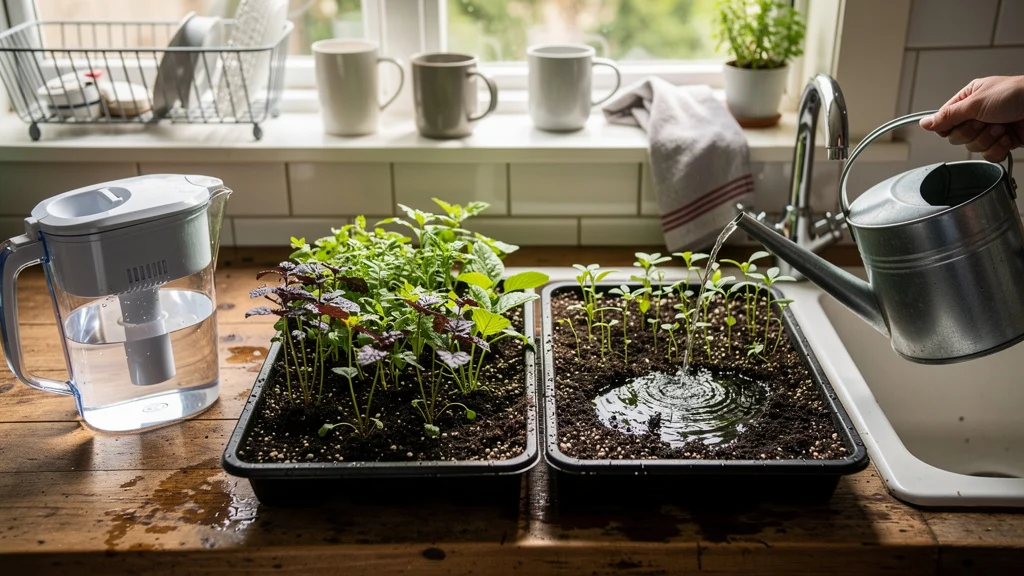
For sprouts, rinsing twice daily and draining at a 45-degree angle for about 30 minutes helps prevent mold, according to a Colorado State University Extension guide. Using filtered water matters, too. Chlorinated tap water can slow germination, but more importantly, starting with clean water reduces the chance of introducing contamination from the beginning. If you already use filtered water for fermentation projects, that same water works well for sprouting.
Seed sourcing is the other half of the equation. Some growers soak seeds in a dilute hydrogen peroxide or vinegar solution before the initial soak, though the effectiveness of home disinfection methods is debated and not officially endorsed by food safety agencies.
For microgreens, watering from below rather than overhead keeps the leaves dry and reduces the chance of mold or bacterial growth on the edible portion. Bottom watering also encourages stronger root development, which makes the plants easier to harvest cleanly.
Microgreens vs Sprouts: Nutrition Breakdown
Both are nutrient-dense. The question is which nutrients you are after, and that is where the microgreens vs sprouts comparison gets specific.
Sprouts excel at bioavailable protein, enzymes, and fiber. Because you eat the seed coat and root, you get the compounds the seed stored for germination. Broccoli sprouts, for example, are known for high levels of sulforaphane, a compound that continues to attract research attention. One secondary research lead noted that broccoli sprouts showed significantly higher polyphenol levels compared to both broccoli microgreens and baby leaves.
The enzyme content in sprouts is particularly notable. These enzymes can aid digestion and may make the nutrients in sprouts more bioavailable than those in seeds or even mature vegetables. That is one reason sprouts have been used in traditional diets for centuries, long before anyone measured vitamin content in a lab. If you are interested in enzyme-rich foods, making your own probiotics offers another way to add beneficial enzymes to your diet.
Microgreens win on vitamins and antioxidants. The photosynthesis that happens under light produces chlorophyll, carotenoids, polyphenols, and flavonoids in concentrations that sprouts, grown in the dark, cannot match. The study compared nutrient concentrations in microgreens to their mature counterparts. Red cabbage microgreens had 40 times more vitamin E and six times more vitamin C than mature red cabbage, with microgreens being four- to 40-fold more concentrated with nutrients.
The trade-off is real. Sprouts give you more of what the seed provides. Microgreens give you more of what the plant synthesizes under light. We think both have a place, but the choice depends on what you are trying to add to your diet. The microgreens vs sprouts nutrition debate does not have a clear winner— different strengths.
Cost and Effort
Sprouts are faster and cheaper. The equipment cost for sprouts is minimal. A quart mason jar, a sprouting lid or a piece of cheesecloth, and a bowl or dish rack for draining are all you need. The total startup cost is under ten dollars, and the jars and lids last indefinitely. There is no electricity cost, no light requirement, and no growing medium to buy or dispose of.
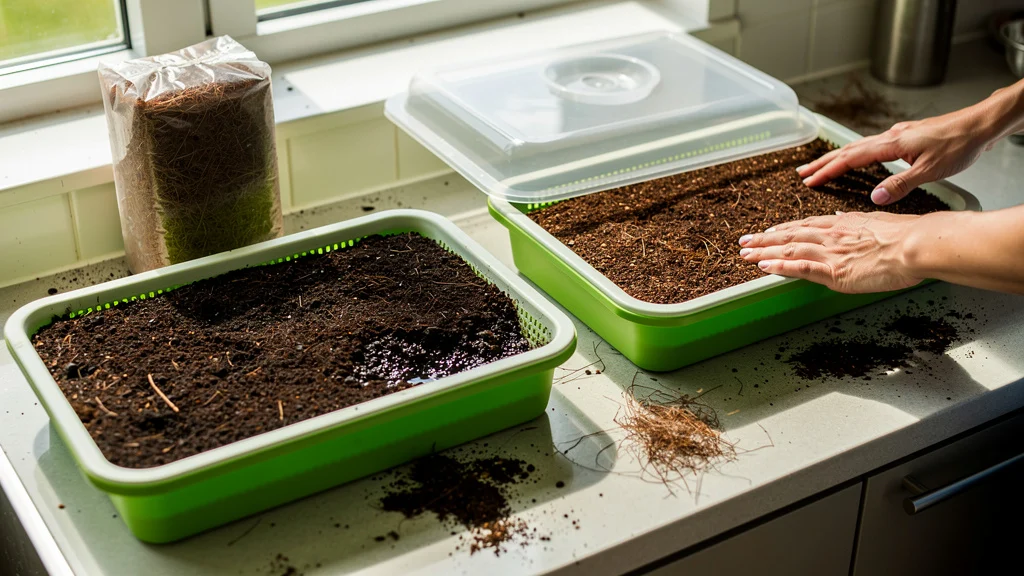
Microgreens require more setup. You need trays, a growing medium, and a light source if you do not have a sunny window. The timeline is longer, and the yield per square inch is lower than sprouts in a jar. But the shelf life is better, the safety profile is cleaner, and the nutrient profile skews toward vitamins and antioxidants rather than protein and fiber. If you want to understand more about why microgreens are worth the effort, the vitamin concentrations alone make a strong case.
The ongoing cost for microgreens depends on whether you reuse your growing medium. Soil can be composted and refreshed, but it adds labor. Coco coir can be reused once or twice if you are careful, but most growers treat it as single-use. Hydroponic mats are convenient but add to the per-tray cost.
We think sprouts make sense if you want the fastest, cheapest path to homegrown greens and you are comfortable managing the food safety considerations. Microgreens make sense if you want something that lasts longer in the fridge, carries less risk, and delivers higher concentrations of the vitamins that come from photosynthesis. The microgreens vs sprouts cost comparison favors sprouts upfront, but microgreens deliver better value per week of shelf life.
Which One We Grow Now
We grow both, but not in equal rotation.
Sprouts show up in our kitchen when we want broccoli sprouts specifically, for the sulforaphane, or when we need something ready in three days. We rinse them with filtered water, drain them completely, and eat them within a week. We do not serve them to guests who fall into any of the FDA’s high-risk categories, and we do not pretend the food safety issue does not exist.
Microgreens are the default. They last longer, they taste better in salads and on sandwiches, and we do not worry about who eats them. The two-week timeline fits our rhythm better than the daily rinsing sprouts require, and the fact that we can cut what we need and leave the rest growing in the tray makes them more practical for a household that does not eat a full jar of sprouts in one sitting.
One Reddit user described switching from a microgreens business to focusing on sprouts after studying embryonic growth and nutrition. That is a valid choice, and the nutritional argument for sprouts is strong. But for us, the combination of shelf life, safety, and the vitamin profile that comes from photosynthesis tips the balance toward microgreens most of the time.
The question is not which one is better. The question is which trade-offs you are willing to accept. Sprouts are faster, cheaper, and higher in protein and fiber, but they spoil quickly and carry a documented food safety risk. Microgreens take longer, cost more to set up, and require light, but they last twice as long in the fridge and deliver higher concentrations of vitamins C, E, and K. The microgreens vs sprouts debate comes down to your priorities: speed and cost versus shelf life and safety. We wanted to know what actually works, what the trade-offs are, and what you are paying for beyond the sticker price. Now you know what we know about microgreens vs sprouts, and you can make the choice that fits your kitchen.