What this covers
- Why Garden Bed Raised Wood Choice Matters More Than Construction
- 1. Western Red Cedar
- 2. Redwood
- 3. Pressure-Treated Lumber (Residential Ground-Contact Rated)
- 4. Composite Lumber (Trex and Similar Brands)
- 5. Untreated Spruce or Aspen Poles
- 6. Corrugated Metal Roofing Panels
- 7. Reclaimed or Salvaged Hardwood
- Three Woods to Avoid for Garden Bed Raised Wood
- How to Make Any Garden Bed Raised Wood Last Longer
- The Real Cost of Cheap Garden Bed Raised Wood
- What Makes Sense for Most Gardeners
A garden bed raised wood frame will rot. The only question is when, and whether you will replace it once or five times before you give up on gardening altogether. The difference between a bed that collapses in four years and one that holds strong for fifteen comes down to three decisions: species, thickness, and whether you believe the marketing on pressure-treated lumber.
The natural decay of wood in contact with soil is not a problem which can be solved. The time that a board of wood will last outdoors in contact with damp soil will cost considerably more at the lumberyard than it actually lasts when put together to make a bed which is filled with compost and then watered. On initial assembly a cheap pine frame for outside use looks much the same as a expensive cedar frame. But four years later the pine frame will still be square while the cedar frame will have deteriorated to such an extent that it will be leaning against the ground.
Why Garden Bed Raised Wood Choice Matters More Than Construction
A raised bed can be built to perfection with square corners and held together with galvanized screws on a level base of wood. But the wood will still rot at the soil line.
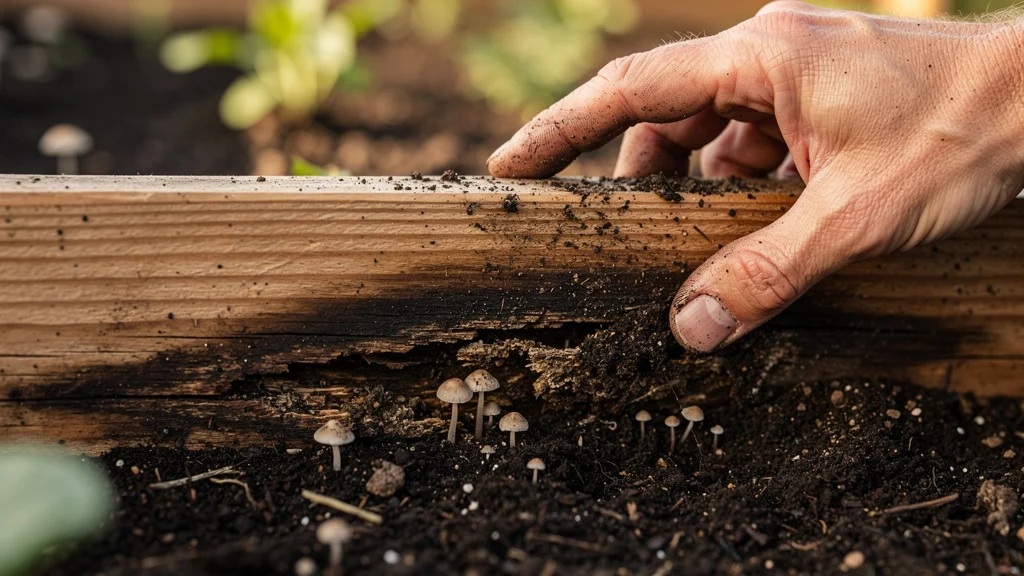
Most rot occurs because soil is left moist against untreated wood. In moist wood fungi form to break down the cellulose. Some species have oils and tannins in their heartwood which prevents rot. But, many other species deteriorate rapidly over a single season. The thickness of a board is also important. The greater mass of a thicker board (such as 2” as opposed to 1”) means it will lose mass more slowly and will fail less quickly than its thinner counterpart.
The untreated pine, spruce or Douglas fir wood beds last for three to five years before they collapse at soil level. At most home improvement stores this is the cheapest option and has to be re-built every few years.
1. Western Red Cedar
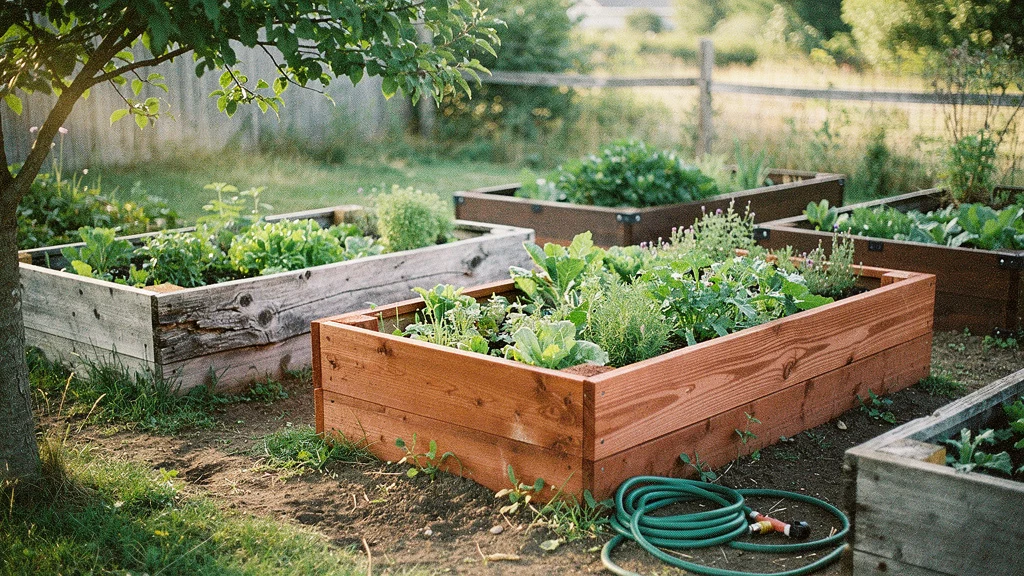
Western Red Cedar is the usual material for garden bed raised wood borders and that is for good reasons. Untreated Western Red Cedar beds last for about ten to fifteen years in contact with soil. This is about twice the life of untreated pine and is achieved without resorting to pressure-treated, chemically-treated timber.
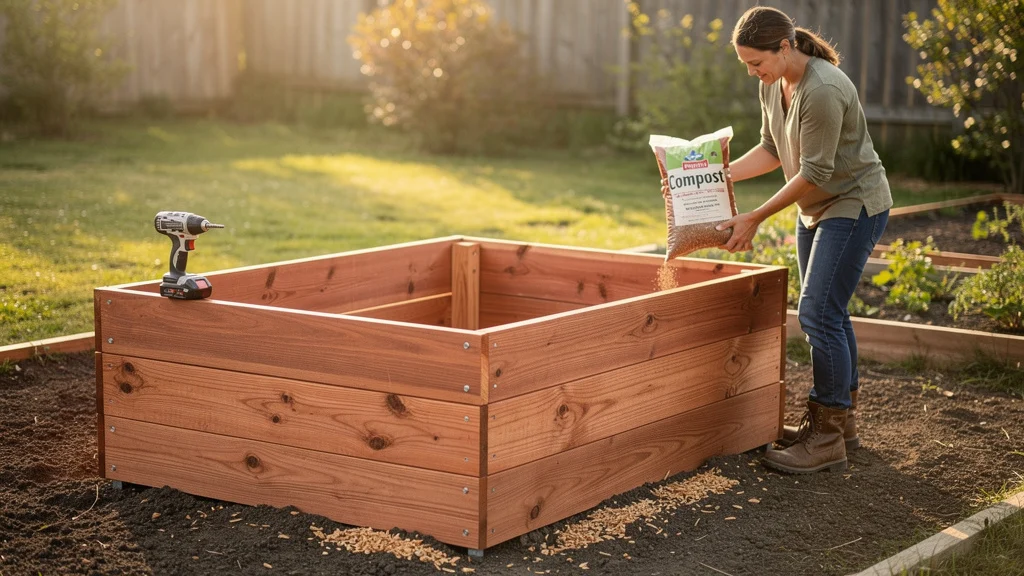
Natural oils in the wood resist decay by fungi. No need for a preservative coating to withstand soil contact which is why western red cedar is frequently used in pre-assembled bed frames and similar items.
Cedar is worth the premium if you plan to keep the bed in place for a decade or more. The upfront cost stings, but the alternative is replacing cheaper wood two or three times over the same period. In hot, humid climates, expect results toward the shorter end of the range, as cedar lasts longest in dry climates. If the wood doesn’t get a chance to dry completely, it will rot much faster than its average life expectancy.
2. Redwood
Similar to cedar, redwood lasts ten to fifteen years when left untreated. Due to increasing restrictions on the harvesting of this tree, redwood is not as available as it once was, but it is still widely milled and available on the West Coast.
While redwood has similar decay resistance to cedar through the natural tannins found in both species, there can be a huge difference in pricing due to supply in your region. The wood costs more to ship to the Midwest or East Coast than it does to customers in California or Oregon, so making cedar a more practical choice for gardeners outside of the West Coast. In addition, sourcing and price checking with local suppliers is much easier with cedar than with redwood.
3. Pressure-Treated Lumber (Residential Ground-Contact Rated)
This is where the debate gets loud.
Some gardeners avoid pressure-treated wood entirely due to concerns about chemicals leaching into soil near food plants. Others report that local master gardener classes have stated modern pressure-treated lumber is safe for raised beds.
The disagreement centers on copper-based preservatives like copper azole, which replaced the arsenic-based chromated copper arsenate (CCA) treatment banned by the EPA for residential use effective January 1, 2004. Modern residential pressure-treated wood uses copper azole for ground contact applications, not arsenic. A multi-year Oregon State University field study using Douglas-fir lumber pressure-treated with copper azole to ground contact specifications found that copper increases stayed small and were limited to soil within one inch of the wood—about 20 ppm immediately next to the treated wood frames and not detectable at any greater distances.
After five years of data collection, the study found no impact of treated wood garden bed frames on the copper concentrations in vegetables grown in them, with no increase in copper detected in any vegetables or herbs grown across all five growing seasons.
If you are still unsure whether you should use this product, read the Oregon State data. This was done in real garden situations over multiple growing seasons, not in a laboratory. The copper is in place at the wood surface and does not leach into crops.
Only buy residential-grade pressure-treated lumber that is specifically labeled for ground contact use. Industrial-grade treated lumber is made with different preservatives and is not meant for use in garden bed raised wood. Check the end of the pressure-treated lumber for a stamp that indicates the specific preservative used and whether it is rated for ground contact.
Use KDAT (Kiln Dried After Treatment) lumber. There is a community of people who recommend this because you can immediately start building with the lumber as opposed to allowing it to dry out first. Wet treated lumber is heavy, warped and difficult to cut while still wet.
4. Composite Lumber (Trex and Similar Brands)
Composite boards don’t rot. Nor do they warp, split or require sealing. That means gardeners can look forward to using the material to clear decay-ridden wood from their gardens once and for all.
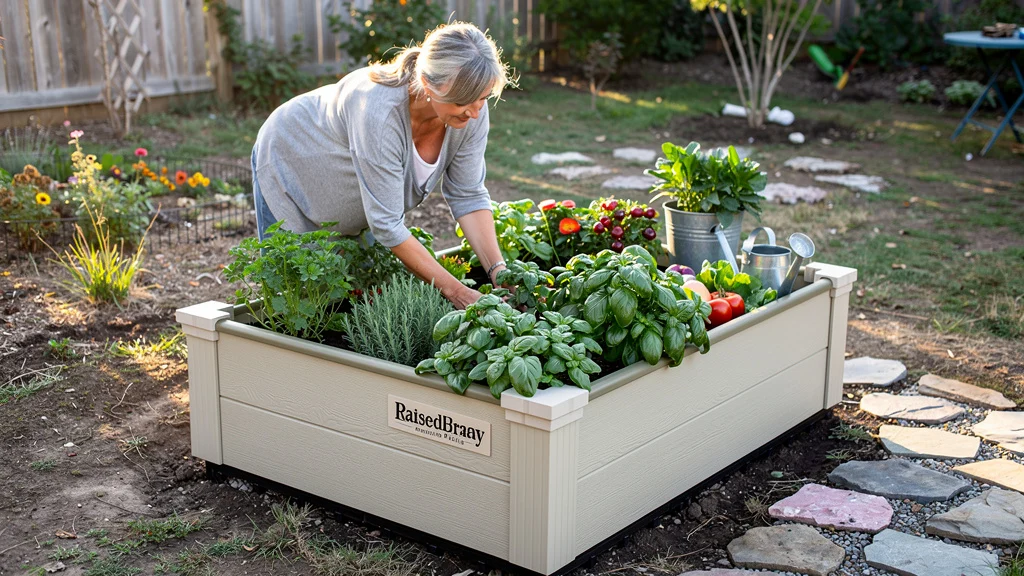
The trade-off is cost. Composite is also heavier than wood, which makes solo assembly harder.
Composite decking may be a good option for long lasting, permanent bed situations, found in very high visibility areas where appearance will be a constant for twenty years or more. For test or short-term use decks, the cost of composite decking is not justified when cedar will last for ten years or more for a fraction of the cost.
5. Untreated Spruce or Aspen Poles
Alaska gardener uses fresh-cut spruce and aspen poles from upper tree lengths for his raised beds. These natural wood poles will eventually rot but he piles the soil toward the middle of the poles, away from the edges, and can then replace them as needed.
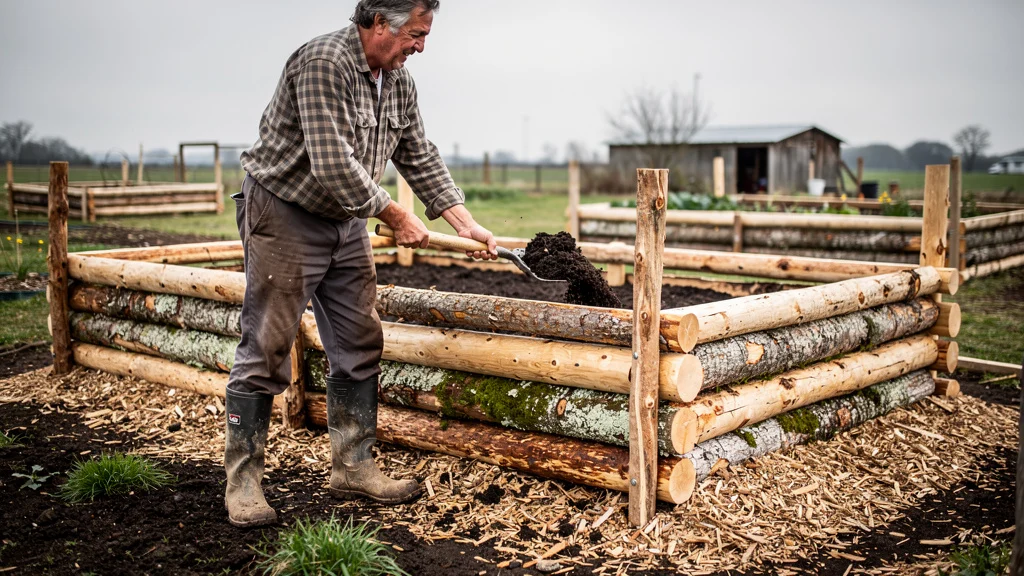
This is a low-cost option if you have access to your own timber or can source poles locally. The lifespan will be shorter than milled cedar—likely in the three-to-five-year range for untreated softwood—but the material cost is nearly zero if you cut it yourself.
6. Corrugated Metal Roofing Panels
Metal may not look like wood but it serves the same purpose of containing soil in a raised bed frame that won’t rot.
A thrifty gardener used old scrounged corrugated metal roofing sections that were slightly damaged bought at a lumber yard to make raised beds. The metal was screwed together with roofing screws and t-stakes and then filled with gravel, then soil and compost. The gardener enjoys his raised beds after three years but notes that the sharp edges have to be folded down or covered with clips for hand safety.
These metal beds heat up faster in the spring and then cool down faster in the fall. Also, be aware of the sharp edges when children help in the garden.
7. Reclaimed or Salvaged Hardwood
Hardwoods, such as oak, maple, or locust are resistant to rot better than softwoods. Reclaimed lumber can often be had for free or cheap from demolition sites, old barns, etc. Pallets are another source of reclaimed lumber.
When salvaging old wood for your garden it can be hard to tell what preservatives the wood may have been treated with. This is especially true for items such as old railroad ties, utility poles and industrial pallets which are often soaked in large quantities of creosote and other preservatives which you wouldn’t want to grow food against. Reclaimed barn wood and old residential lumber is generally safer but you still need to watch out for old nails and screws that have been embedded in the wood. These can cause plenty of problems including dulling your saw blades.
Verifying the history of the wood and having the appropriate tools to mill the wood to size makes the effort of using reclaimed hardwood worth it. One single oak beam can generate enough lumber for several beds. Reclaimed hardwood outlasts pine by years.
Three Woods to Avoid for Garden Bed Raised Wood
Not all woods are suitable for the garden bed. Some decay too quickly to be worth the effort, and others even harbor pests or diseases that no amount of money can buy.
Untreated Pine, Fir, or Spruce (Standard Framing Lumber)
This is the cheapest garden bed raised wood at the home improvement store, and it is also the one that will fail fastest. Untreated pine, spruce, or Douglas fir beds last three to five years before boards start to crumble at the soil level. In wet climates or poorly drained sites, expect closer to three years.
Untreated softwood is a false economy unless you are building a single experimental bed and plan to replace it in a few seasons. For permanent beds, the cost of rebuilding every four years quickly exceeds the upfront savings.
Railroad Ties and Utility Poles
The untreated wooden railroad ties are soaked in creosote, a coal tar distillate which protects the wood for many decades while it is buried under train tracks. It seeps into the soil and gives off an awful smell in the heat of the summer. Similar industrial preservatives are used to treat utility poles which are expected to last thirty years or more outside.
These items are not intended for residential use. They have not been rated for use as garden bed raised wood close to food crops. This wood is cheap or free because it is contaminated — leave it where you found it.
Plywood or Oriented Strand Board (OSB)
Plywood and OSB are held together with adhesives that deteriorate in wet conditions. Even so-called “exterior” plywood will delaminate after a season or two of exposure to soil, and the glues used in typical construction-grade plywood and OSB are not food-safe.
Plywood beds appear in community gardens occasionally, usually built by someone trying to save money on materials. They look fine for a few months, then the layers start peeling apart at the edges. By the second year, the boards are spongy and falling apart.
How to Make Any Garden Bed Raised Wood Last Longer
Even rot-resistant wood benefits from a few construction choices that slow moisture damage.
Instead of using 1-inch lumber, try using 2-inch lumber. The added mass will roughly double the functional lifespan of the wood, regardless of species. For example, a 2×10 cedar board will last for years longer than a 1×10 cedar board of the same species.
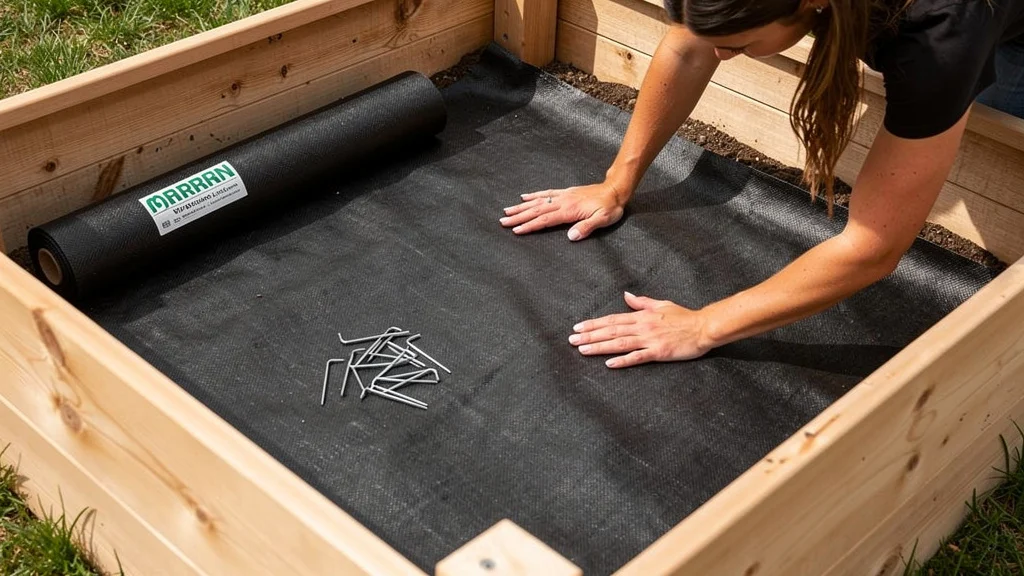
One tip is to line the inside bottom of your raised beds with landscape fabric or heavy plastic sheeting. This single layer will dramatically slow up the moisture wicking into the wood of your raised beds and extend their life greatly. This is opposite to another community tip which warns against covering the inside of your raised beds with plastic as this traps moisture against the wood of your raised beds and will cause them to rot quickly. This tip likely was written with the plastic being wrapped around the entire inside of the raised bed and not between the soil and the wood of the raised bed.
Use stainless steel or galvanized exterior screws instead of standard screws. These will not corrode and create unsightly stains on the wood surrounding the screw head as standard screws do. Exterior screws, such as galvanized deck screws, cost a few dollars more per box than standard screws but will last the life of the bed.
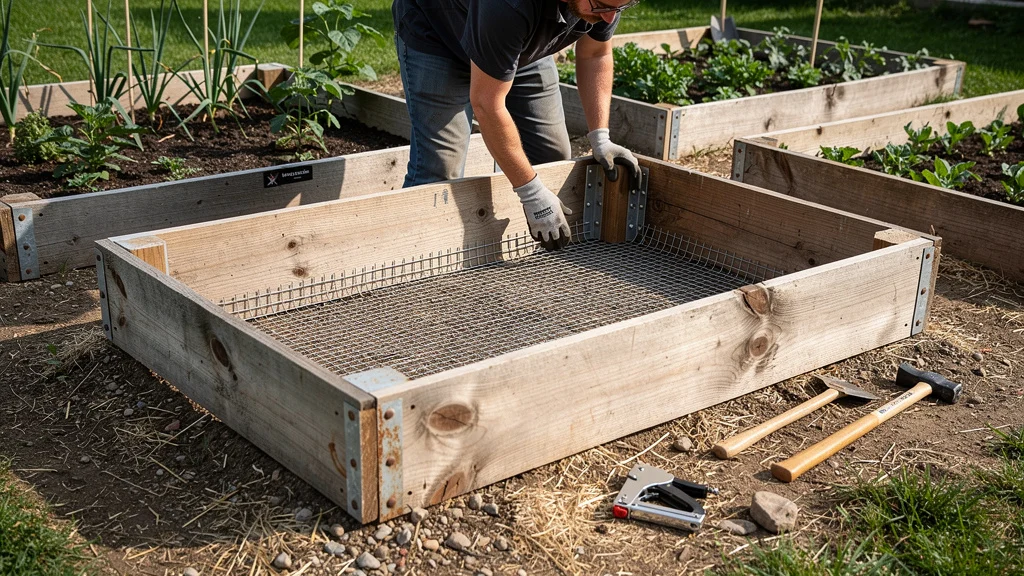
To protect voles and gophers, add wire mesh or wire cloth to the bottom of the bed before adding soil. This does not affect the wood’s life, but it will save you much aggravation when your root vegetables disappear underground due to tunneling rodents.
The Real Cost of Cheap Garden Bed Raised Wood
Material cost is only part of the equation. Labor and replacement frequency matter as much.
Untreated pine lasts three to five years. Cedar lasts ten to fifteen. Over a twenty-year period, you will rebuild the pine beds three or four times. You will rebuild the cedar beds once, maybe twice. The break-even point is around year seven. If you plan to keep the bed for less than that, untreated softwood is defensible. If you plan to keep it longer, cedar or treated lumber pays for itself.
What Makes Sense for Most Gardeners
Cedar, mostly. Thick cedar.
2×10 or 2×12 cedar boards are the best balance of cost, longevity, and availability for most gardeners building garden bed raised wood frames. The boards are heavy enough to resist warping, thick enough to last a decade or more, and widely available at lumberyards and home improvement stores.
For the frugal gardener, pressure-treated lumber rated for ground contact may be an acceptable option based on findings from Oregon State University. Untreated cedar or redwood is the safest option for a long-term garden bed, even if it costs more in the short-term.
For a showpiece garden, composite decking may be the way to go, if cost is not an issue. In very cold climates, metal decking can provide excellent thermal mass. Reclaimed hardwood decking is also worth the effort and expense if you have access to clean materials and the tools to mill them.
Untreated pine may be worth your while to use in certain situations, such as a test bed for where to place your beds or as a temporary solution which you will tear down in a few years. As for using railroad ties and plywood in your food garden, the answer is never.