
Backyard chickens looked like a hedge against the grocery bill when egg prices spiked in 2022, and the backyard chicken boom followed. Prices jumped from $1.78 per dozen in December 2021 to $4.25 in December 2022, driven by avian flu that killed more than 43 million egg-laying hens. Plenty of people decided a coop in the yard would solve the problem.
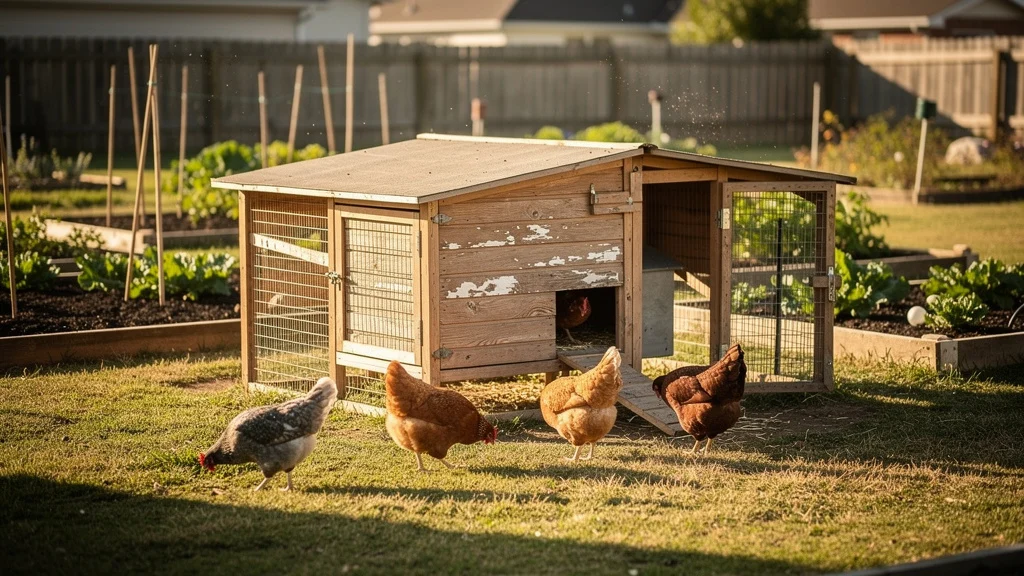
It didn’t work out that way. Backyard chickens aren’t a hedge against inflation—they’re livestock. You keep them because you want fresh eggs, because you like the birds, or because you value knowing exactly what your food ate and where it lived.
The Upfront Bill
A coop is the largest single expense of keeping backyard chickens. Community reports show used coops selling for a few hundred dollars, basic kits running $500 to $1,000, and custom builds reaching $2,000 to $4,000. According to BackYardChickens forum users, one keeper documented spending $1,000 for a 4×8 predator-proof structure. Another invested $400 in an online coop, then added a $250 automatic door and a $45 feeder to allow two-week absences.
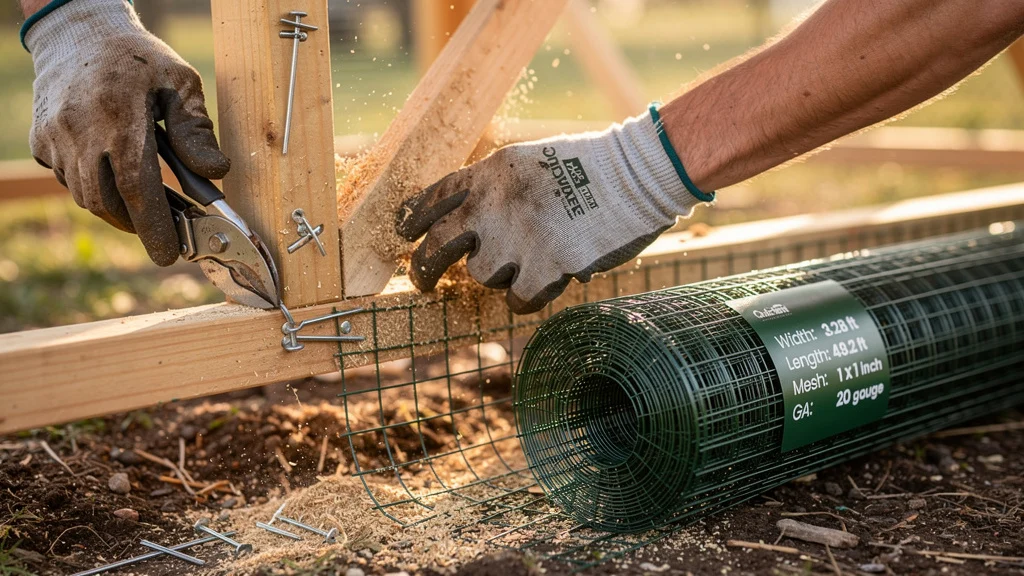
Predator proofing for backyard chickens isn’t optional. Oregon State University Extension recommends hardware cloth along the base or, better, lining the entire underside to stop rats, raccoons, bobcats, and coyotes from digging under. Hardware cloth has small, welded wire squares—usually half-inch or quarter-inch—that predators can’t tear or chew through the way they can with chicken wire. That material costs $50 to $100 depending on the perimeter. A single lost bird costs $20 to $30 to replace as a pullet, plus whatever emotional toll comes with finding feathers and blood in the run at dawn.
Backyard chickens each need 2-3 square feet inside the coop and 8-10 square feet outside in the run. For a flock of six birds, that means a minimum coop size of 12-18 square feet and a run of 48-60 square feet. Skimp on space and you’ll deal with pecking, stress, and disease—all of which cost more in the long term than a larger coop would have up front. Build or buy bigger than the minimum. It keeps your chickens healthier and gives you room to add more birds later.
Chicks cost $2 to $10 depending on the breed and supplier. Local hatcheries run cheapest, farm supply stores typically charge $4 to $6, and pullets (birds that are 4 to 16 weeks old) cost $15 to $35 or more. Common breeds may cost $3 to $4. A first-year layer of a rare breed can run $20 to $30 or more.
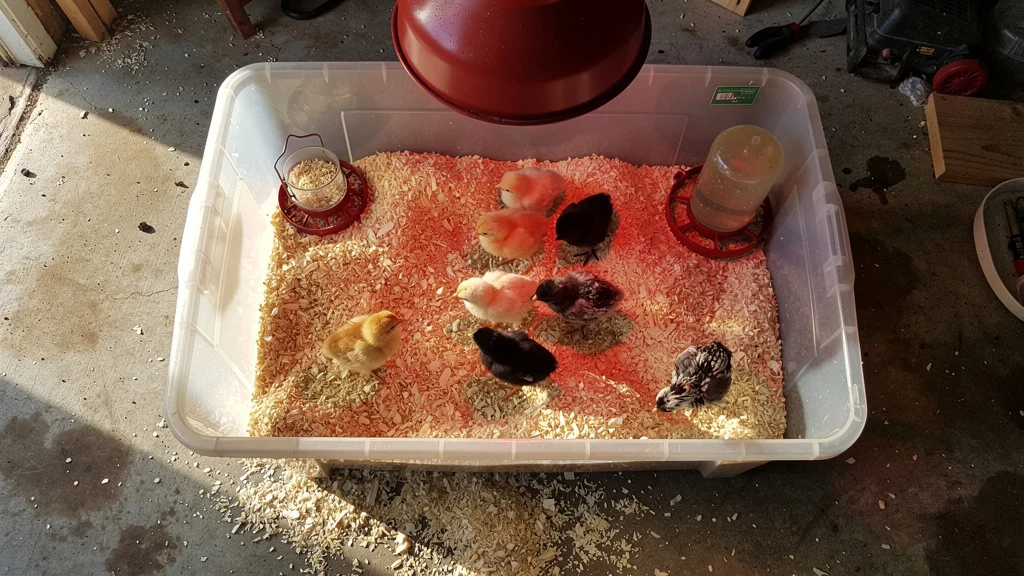
A brooder setup for chicks adds $20 to $40. Feeders and waterers cost around $50 for basic gravity models. Winter supplies—a heat lamp or heated waterer—add another $50. One breakdown estimated total startup costs for six chickens at $590 to $720, assuming a modest coop and no automation.
Monthly Feed and the Supplementation Debate
Feed is the recurring cost of backyard chickens that never stops. A mature chicken eats roughly half to one cup of feed daily, translating to 5 pounds per month if free-ranging and 6 pounds if confined. Chickens eat more in winter to maintain body temperature, so the monthly average shifts with the season.
A 40- to 50-pound bag of economy layer feed with 16% protein costs around $14. Organic mixes with 18% protein range from $22 to $40 per bag. Monthly feed costs for a small flock of backyard chickens land between $20 and $50 depending on flock size and feed choice. Water is the other daily input; heavily chlorinated tap water is one reason we run the whole-house water filter we wrote about for the kitchen, and the coop hose comes off the same line.
According to community reports, one keeper with 18 backyard chickens spends roughly $20 per month by mixing grains and fermented oats. Another with three hens on premium feed spends $5 to $10 monthly.
Layer feed with 16% to 18% protein and plenty of calcium is what backyard chickens need for consistent production and strong eggshells. Many keepers offer scratch grains or cracked corn as a cheap alternative. That may reduce costs in the short term, but it tanks laying performance. The reduction can be as much as 30%. Scratch is a supplement, not a complete feed. Hens on scratch produce fewer eggs with thinner shells and can suffer from nutrient deficiencies.
The backyard chickens community disagrees sharply on supplementing with table scraps and garden waste. According to forum discussions, one keeper reduced a 50-pound bag of feed from lasting three weeks to lasting two months by adding vegetables and leftovers, and egg production from the same ten hens increased from six to nine or ten daily. A Hawaii-based owner with four hens supplemented with restaurant leftovers and homemade rice with raisins and vegetables, spending less than $30 monthly while averaging 24 eggs per week.
Some dismiss the idea of using supplements by calling it hog feeding. Others report positive results using kitchen waste and garden scraps as supplements to a complete diet—lower feed costs and higher production. The conflicting advice is frustrating, but the answer probably depends on what you’re feeding and how much. Monitor egg production and overall health if you’re using scraps, and don’t rely on them to replace a balanced ration.
What the First Year Actually Costs
Backyard chickens don’t lay until they’re three to four months old. Once daylight drops below 14 hours per day, laying slows or stops unless you add timed lighting to extend the day. Hens begin laying when daylight reaches 14 hours per day during early spring, and maximum egg laying occurs when day length reaches 16 hours per day. Poultry owners can manipulate the egg laying cycle by providing artificial lighting in coops, applied in the morning hours, but it adds another small recurring cost to the power bill.

Production peaks in the first two years, then declines. A hen that laid five or six eggs per week in year one may drop to three or four in year three and two or fewer by year five. Hens can live eight to ten years, but most backyard keepers face a choice around year three: keep feeding birds that lay infrequently, cull them for meat, or rehome them.
According to one keeper’s documentation, a flock of 50 laying hens costs roughly $200 per month, or about $4 per chicken. They purchase 30 new chicks every spring to replace older hens whose production drops and to offset losses to hawks. That scale is unusual for a backyard flock, but it illustrates the ongoing replacement cycle that smaller operations face too.
Bedding for the nesting box can be made from shredded junk mail, lawn clippings, or sawdust from firewood. If you have access to these materials and time to collect and shred them, they can be free. Otherwise, a $6-$10 bag of pine shavings will last a few weeks in the coop of a small flock.
The Costs Nobody Mentions Until They Happen
Veterinary care for backyard chickens is expensive and rarely practical. A check-up can cost $120, and treatment runs $100 to $500. Most backyard keepers don’t take sick birds to the vet. Instead they’re culled or allowed to recover on their own.
Hawks, raccoons, foxes, and dogs see backyard chickens as prey. Hardware cloth and a proper coop deter most predators, but sometimes they get in. Replacing a lost bird with a pullet or starting another chick costs $15 to $30 each time. Over the season, those losses add up.
Travel requires advance planning. Backyard chickens need daily feeding, watering, egg collection, and coop security. Automated feeders and waterers can store food and water for a few days, but longer trips require a neighbor, friend, or paid pet sitter. Some sitters charge $15 to $30 per visit, adding up to $100 or more for a week’s vacation. Not everyone has a neighbor willing to care for chickens.
Permits and Setbacks
Permit fees vary by location. Some cities charge $10 to $50 per year to track flock ownership and fund enforcement. Maryland requires registration with the state Department of Agriculture for anyone keeping chickens, and counties layer on additional rules. Baltimore City allows up to four chickens on lots under 2,000 square feet and requires a permit from the Bureau of Animal Control. Howard County permits up to eight hens on lots of at least 10,000 square feet, with the coop set back 15 feet from lot lines and 50 feet from neighbors’ houses. Annapolis allows up to five chickens with neighbor approval.
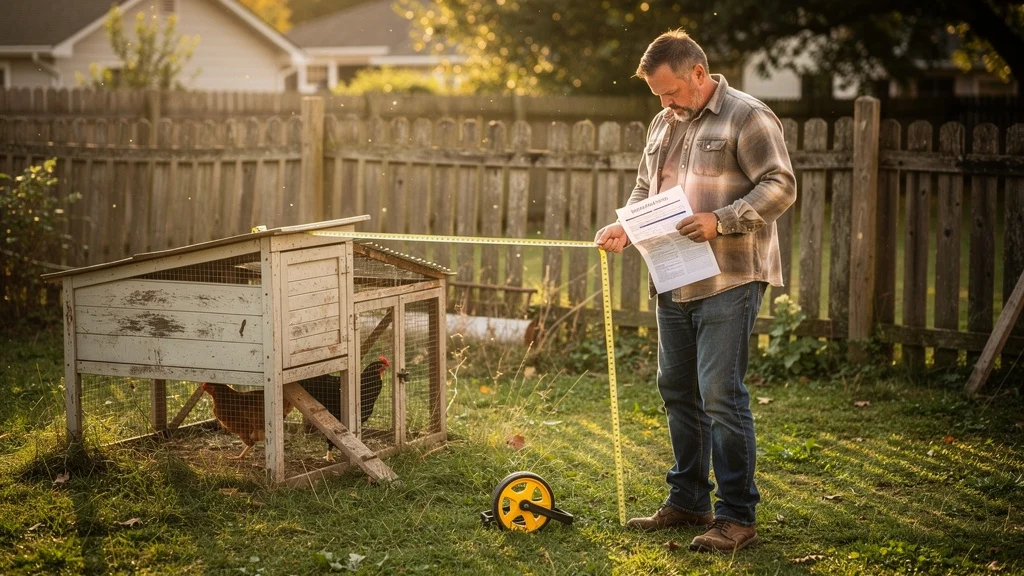
Setback requirements are often the largest factor people don’t realize when designing a coop for backyard chickens. Typical requirements place the coop 10 to 25 feet from property lines and 25 to 50 feet from residential neighbors. That 50-foot neighbor setback in Howard County, for example, often eliminates the most convenient spot in your yard—the flat area near the garage or the shaded corner by the fence. You’re left building in less ideal locations or discovering you can’t legally place a coop anywhere on your lot. Obtaining a variance is not guaranteed, and the application process can take months.
Where the Savings Actually Show Up
Rebecca Thistlethwaite, Director of the Niche Meat Processor Assistance Network at Oregon State University, states plainly that raising backyard chickens is not cheap and will not save money compared to buying eggs at the market. You will get fresh eggs, but it is not a big money saver.
Most keepers don’t sell any chicken products, but the exceptions are those who sell eggs or hatching stock. According to one keeper’s report, they sell eating eggs at $2.50 per dozen and hatching eggs from blue or green egg layers at $5 per dozen or $5 per chick when hatched. The only cost for this keeper’s four hens is feed, and they’re nearly breaking even, selling one dozen per week for $6.
Processing meat chickens at home resulted in a total variable cost of $14.07 per bird for one keeper raising Cornish Cross, including chicks, feed, bedding, heat, and electricity. With an average processed weight of six pounds, that’s $2.35 per pound. Grocery store chicken often costs less, but the quality and the knowledge of what the bird ate aren’t comparable.
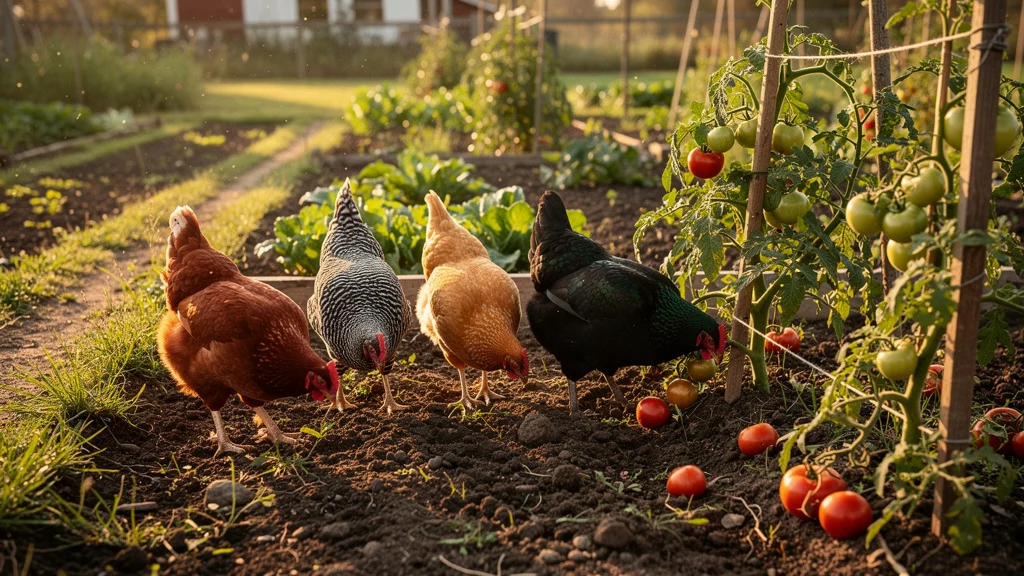
Most of the savings from backyard chickens are indirect. Chickens turn kitchen scraps and garden waste into fertilizer and eggs. If you grow microgreens or sprouts at home, the spent trays and trimmings go straight to the flock instead of the bin. They eat pests, weeds, and dropped fruit. This kind of closed-loop production isn’t reflected in a spreadsheet, but it’s real.
Health Risks
A survey of Ontario backyard chicken owners found that 21.1% allowed birds into the house, increasing the risk of zoonotic pathogen transmission. Most people know about Salmonella, but only half recognized avian influenza as a risk and 40% knew about Campylobacter.
For people with children under five, adults over 65, and people with weakened immune systems, the risk of getting sick from backyard chickens is greater. In the Ontario survey, 36.5% of backyard chicken keepers had one or more high-risk household members. Hand washing after contact with poultry, keeping poultry out of the home, and regular cleaning of coops are not optional.
The survey also found that 63.7% of owners considered their backyard chickens to be family pets. Only 2% of those who considered the chickens to be pets wanted to kill them for meat, compared with 25.6% of those who did not consider them to be pets. This highlights the uncertainty that exists regarding the pet/livestock boundary and how it influences decision making regarding risk, veterinary care, and end of life.
What Backyard Chickens Really Cost
Six backyard chickens cost roughly $600 to $700 to start and $25 to $50 per month to maintain. Over the first year, that’s $900 to $1,300 for about 1,200 to 1,500 eggs, assuming four hens lay consistently and two are still maturing or molting. That works out to $0.60 to $1.08 per egg, not counting labor, water, or the value of your time.
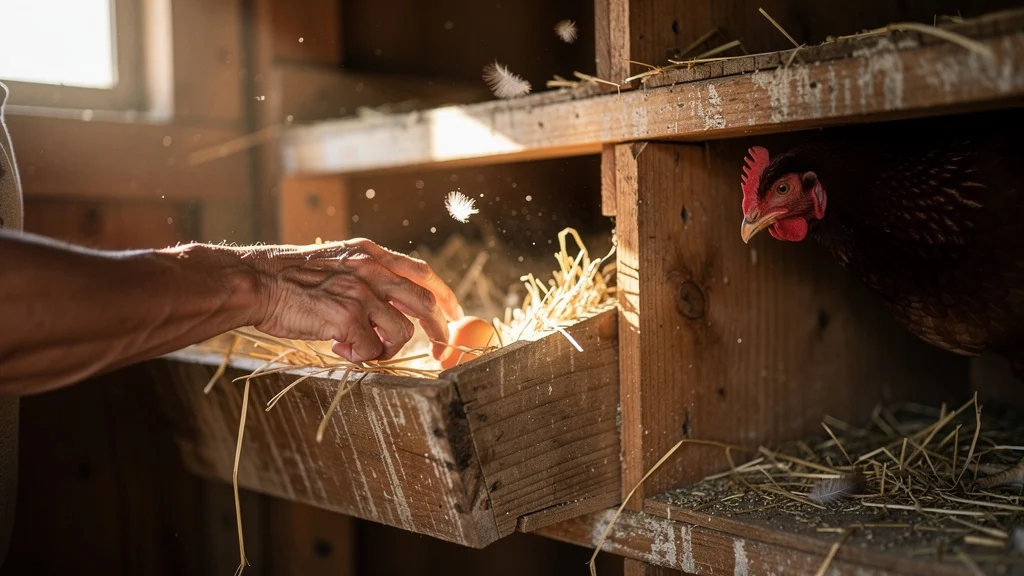
The math doesn’t work unless you can sell eggs, process meat for sale, or place real value on the compost, pest control, and closed-loop satisfaction.
If you’re thinking about backyard chickens, start by asking whether you actually want to keep them. The eggs are a bonus. The birds themselves—the daily routine, the garden benefits, the knowledge of what your food ate—those are the reasons that hold up. Trying to save money at the grocery store won’t.


